 Skip to content

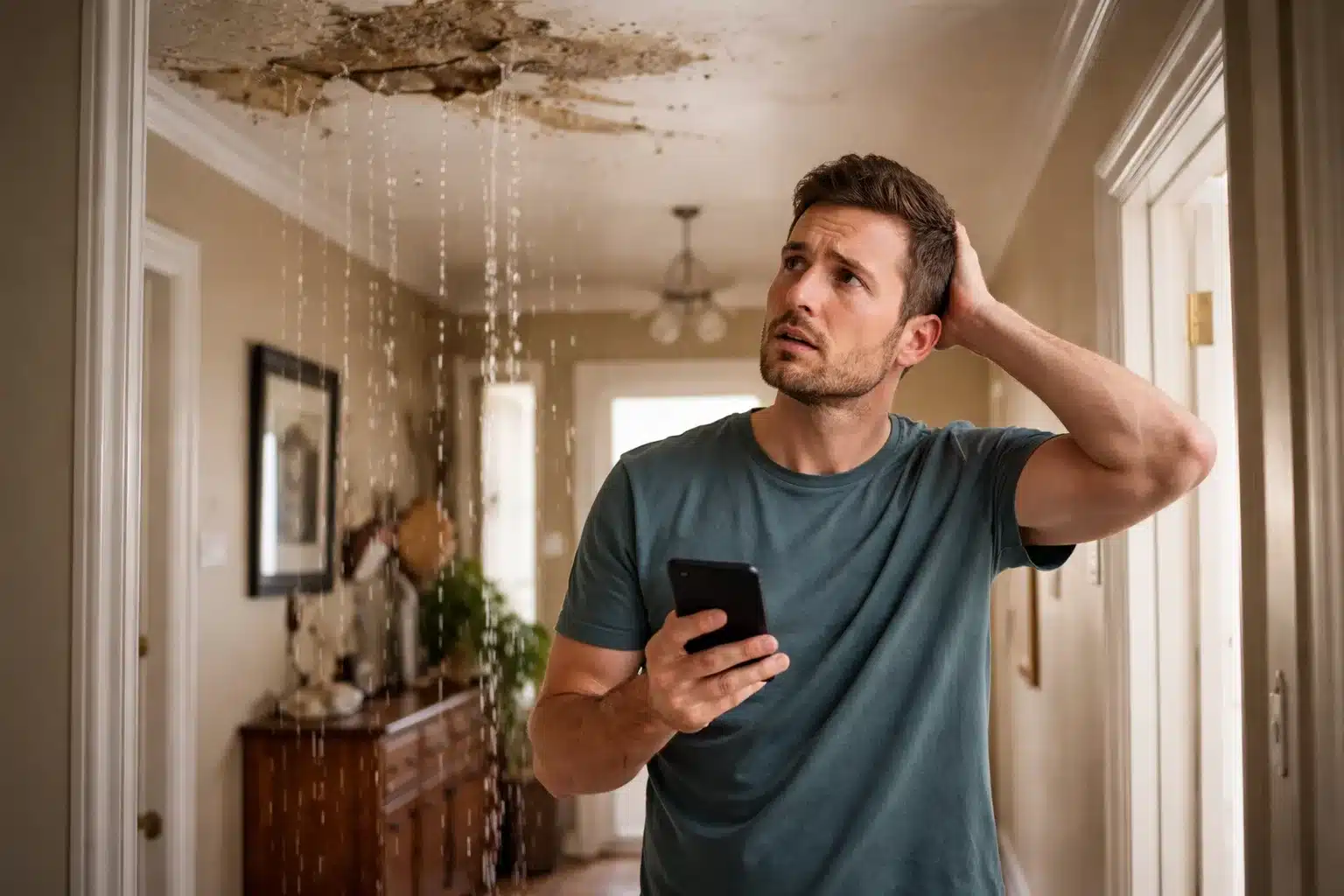
Certain plumbing issues could be postponed until Monday morning. Others cannot. The most common difficulty encountered by most homeowners lies in the knowledge of the difference as the delay in handling a true emergency may translate into a problem that is fixable into thousands of dollars worth of water damage, structural losses, or even health risks.
In this guide, the most obvious moments when you should seek emergency plumbing services are explained, how to act in each case and why it is so important to call the relevant professional.
What Counts as a Plumbing Emergency?
Not all the dripping faucets and slow drainages are emergencies. The real emergency in plumbing is when not immediately addressed it will result in serious damage to the property you live in, pose a health or safety hazard, or make your household lack a vital utility.
The most common situations that qualify as genuine emergencies include:
- Burst or actively leaking pipes flooding a room
- Raw sewage backing up into your home
- A gas smell near water heaters or plumbing fixtures
- Complete loss of water pressure across all fixtures
- A water heater that is leaking and no longer functioning
If any of the above apply to you, do not wait to schedule an appointment. Call an emergency plumber who can respond the same night.
1. A Pipe Has Burst
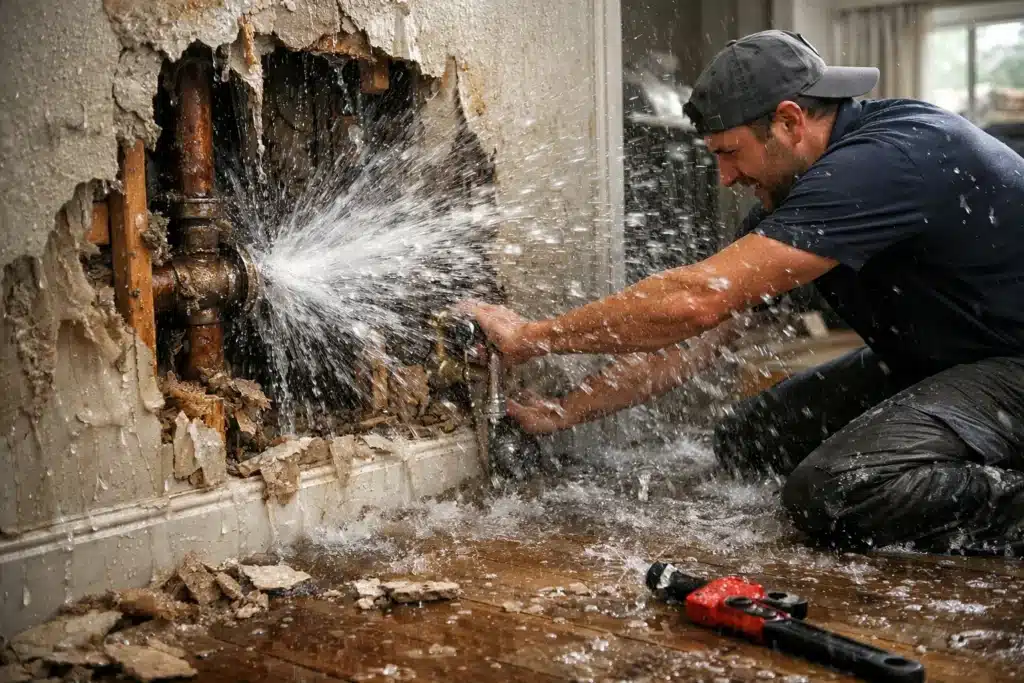
One of the worst things that can happen to a plumbing emergency is a burst pipe. Water may leak off dozens of gallons per minute and in minutes walls, flooring, insulation, structural materials are drenched.
The signs are usually unmistakable:
- A sudden and dramatic loss of water pressure
- Water stains rapidly spreading across a wall or ceiling
- The sound of rushing water inside the walls when nothing is turned on
- Wet or bulging drywall with no visible external cause
Bursting of pipes is also very common in cold weather, especially in uninsulated sections such as basements, crawl spaces, and in unused trenches. When you suspect that you have a burst pipe, then switch off the main water source and call burst pipe repair. Each minute of procrastination is harmful.
2. Your Toilet Is Overflowing and Won’t Stop
A toilet overflow is not just inconvenient but it can be described as a sanitation crisis. When there is sewage in the water it is a direct health threat and will taint your bath floor, grout, and anything porous it comes in contact with.
An overflowing toilet emergency can be caused by:
- A blocked drain line deep in the plumbing system
- A failed float mechanism inside the tank
- A main sewer line obstruction affecting every fixture in the home
In case turning off the shut-off valve behind the toilet will not stop the water flow, or several fixtures are filling up simultaneously, you must call a professional. It is advisable not to use any other drains or toilets in the house until the problem is completely diagnosed and fixed.
3. Your Water Heater Is Leaking
It is vexing to have a water heater that cannot give hot water all at once. An emergency is the water that is actively leaking and pools around a water heater. Leaks are a possible sign of a faulty pressure relief valve, corroded tank or loose-fitting connection which can rapidly accelerate.
Warning signs that your water heater needs immediate attention:
- Water pooling around the base of the unit
- Rapid or continuous dripping from the tank or connected pipes
- Unusual sounds like popping, rumbling, or hissing
- A drop in hot water supply combined with visible moisture
Switch off power supply or gas supply to the unit, and call in a plumber immediately. A leak coupled with pressure build up poses a significant safety hazard in gas-powered units in particular.
4. You Smell Gas Near Your Plumbing Fixtures
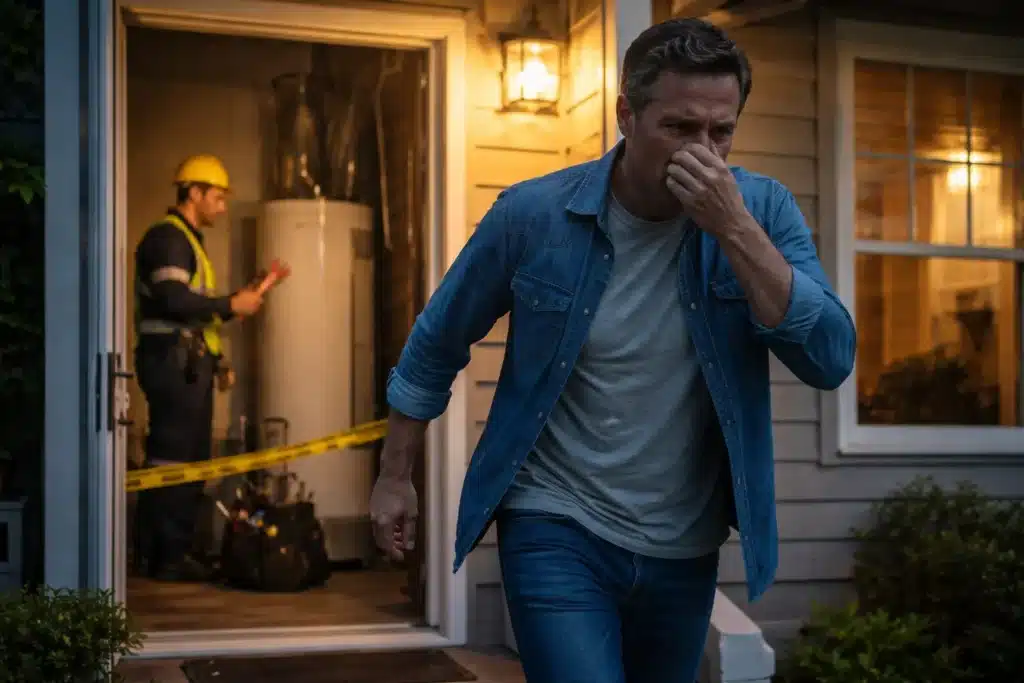
An odor of gases around water heaters, gas stoves or any gas line connection is not something to investigate yourself. Natural gas does not have any odor; the rotten egg smell is just a safety addition because it is convenient to know that the natural gas level becomes too high to be considered safe.
If you smell gas, follow these steps immediately:
- Do not turn any light switches, appliances, or electronics on or off
- Do not use your phone inside the home
- Leave the property immediately and leave the door open behind you
- Call your gas utility provider and a plumber qualified to repair gas leak situations from a safe distance outside
Contact your gas utility company as well as a plumber who would be competent to fix the gas leakage cases at a distance in an outward manner.
5. Sewage Is Backing Up Into Your Home
When the sewage is rising through floor drains, bathtubs, or more than one at the same time, chances are that your main line sewer is clogged with a blockage or even broken. It is among the worst and dirtiest emergency types of plumbing that should be dealt with by the professional immediately.
Signs that point to a main sewer line emergency:
- Multiple drains backing up at the same time
- Gurgling sounds coming from toilets when you run the sink
- Sewage smell inside the home with no obvious source
- Water coming up through the floor drain in the basement
This can be because of a complete obstruction, tree roots encroachment, or because of a collapsed part of the sewer line. The plumber who has camera inspection devices is in a position to identify the problem at the exact point and execute the appropriate drain repairing procedure, it could be hydro-jetting or replacement of sewer line.
6. Sudden and Complete Loss of Water Pressure
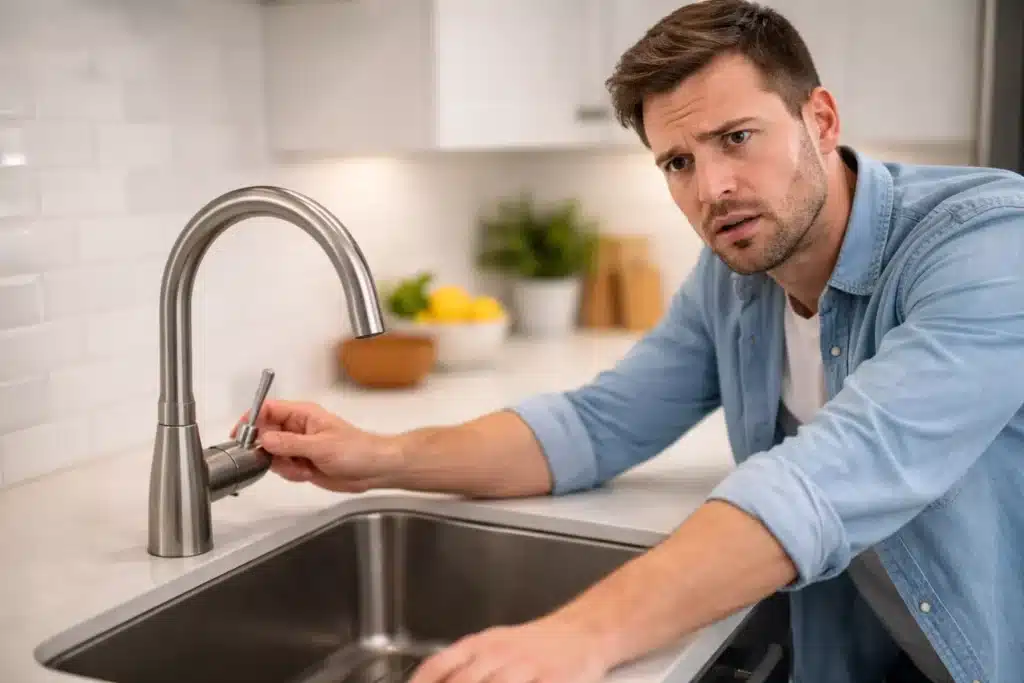
A slow decrease in the water pressure may indicate a mineral formation or a partially clogged valve issue that should be taken care of on a regular basis. This is one thing and total loss of the pressure in several fixtures is entirely another.
This kind of pressure drop can indicate:
- A major pipe failure somewhere in the supply line
- A significant leak inside the walls or beneath the foundation
- A problem with your main water line connection at the street
In both of them, water can be actively escaping somewhere in places that you cannot see. Shut off the main water supply and call a plumber with him the same night instead of letting an undetected leak run the entire night.
Emergency vs. Non-Emergency A Quick Reference
Use this table to help decide whether your situation needs an immediate call or can wait for a scheduled visit:
| Situation | Emergency? | Action |
| Burst or leaking pipe | Yes | Shut off main water, call immediately |
| Overflowing toilet | Yes | Shut off toilet valve, call immediately |
| Water heater leak | Yes | Shut off power or gas, call immediately |
| Gas smell near plumbing | Yes | Leave home, call from outside |
| Sewage backing up | Yes | Stop using all fixtures, call immediately |
| Sudden total loss of pressure | Yes | Shut off main water, call immediately |
| Slow drain in one fixture | No | Schedule a standard appointment |
| Dripping faucet | No | Schedule a standard appointment |
| Running toilet, not overflowing | No | Schedule a standard appointment |
| Low pressure, gradual, one fixture | No | Schedule a standard appointment |
What to Do While You Wait for a Plumber
Acting quickly in the minutes before your plumber arrives can significantly reduce the overall damage. Here are the most important steps to take right away:
- Shut off the main water supply valve if water is actively flooding or a pipe has burst
- Turn off electricity to any affected rooms if water is near outlets or appliances
- Stop using all drains, toilets, and taps if sewage is backing up
- Move valuables, documents, and electronics away from the affected area
- Take photos and short videos of the damage before any cleanup for your insurance claim
- Keep the area clear so your plumber can access the problem the moment they arrive
These steps won’t fix the problem, but they will limit the damage and keep everyone in the household safe until professional help is on site.
Why the Right Emergency Plumber Matters
When something goes seriously wrong at home, the instinct is to call anyone who will answer. But not every plumber who picks up the phone at midnight is equipped, licensed, or experienced enough to handle a true emergency correctly.
A qualified emergency plumber should have the following:
- A valid state plumbing license and full liability insurance
- Hands-on experience with the specific type of emergency you are facing
- Professional diagnostic tools including cameras and pressure testing equipment
- Clear, upfront pricing communicated before any work begins
Quality plumbing service under pressure looks the same as it does on a regular Tuesday professional, thorough, and honest. The difference between a good outcome and an expensive one often comes down to who you call.
Conclusion
Plumbing emergencies are stressful, disruptive, and almost always happen at the worst possible time. But knowing the warning signs of a burst pipe, a gas leak, sewage backup, a water heater leak, an overflowing toilet, or a sudden loss of pressure means you can act fast and call the right people before the damage compounds.
If you are in the Atlanta area, Fix & Flow Plumbing is the team built for exactly these moments. With 24/7 availability, a Georgia Master Plumber’s License (MP209774), BBB accreditation, and a crew of craftsmen who show up on time and get it right the first time, Fix & Flow handles every emergency with the same professionalism they bring to every job.
Call (404) 800-3569, text them directly, or request service at www.fixandflow.co. First responders, teachers, and military personnel receive 10% off all services.
When the water is rising, don’t wait, Fix & Flow is ready.