
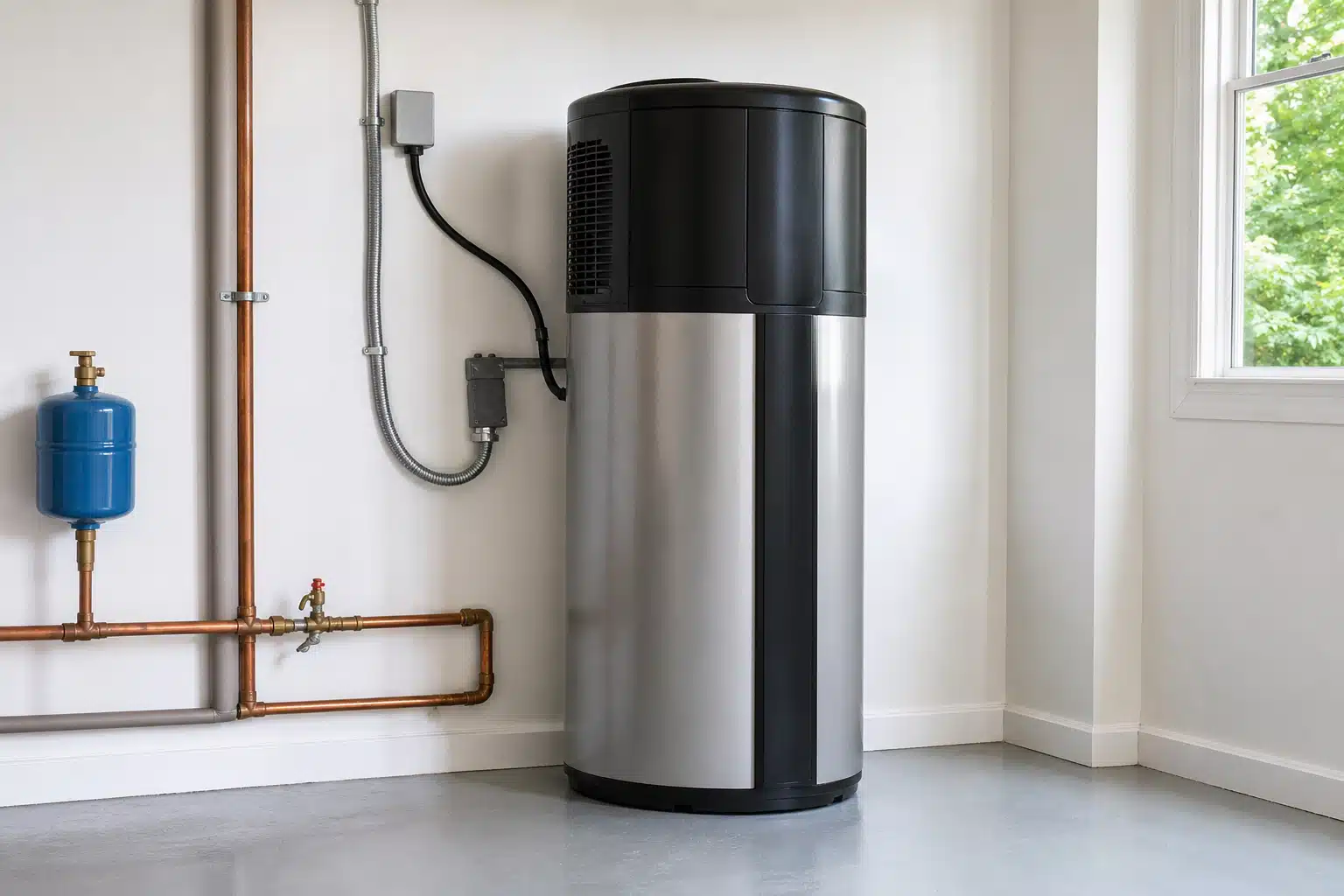
The pitch sounds good: a hybrid water heater uses a fraction of the electricity of a standard electric unit and can cut your water heating costs dramatically. But the upfront cost is higher, the installation is more involved, and it’s not the right fit for every Atlanta home.
We’ve installed and serviced hundreds of these in the Atlanta metro. Here’s what actually determines whether a hybrid water heater makes sense for your home.
How a Hybrid Water Heater Actually Works
A hybrid unit works by pulling heat from the surrounding air and using it to heat water — the same basic principle as a standard heat pump. The electric resistance elements are still there as backup for high-demand periods, but the heat pump handles most of the load.
A standard electric resistance water heater is roughly 95% efficient. A hybrid heat pump unit can reach 250–350% efficiency — it extracts more energy from the air than it consumes in electricity. That’s not a typo. It’s basic thermodynamics, and it’s why the operating cost difference is so significant.
The tradeoff: it pulls heat out of the air in the space where it’s installed. In warm weather, this is a bonus — it’s also cooling and dehumidifying your utility space. Atlanta’s climate is genuinely well-suited for heat pump water heaters because of the mild winters.
Installation Requirements That Determine Whether It Works for Your Home
Space. The unit needs a minimum of 700–1,000 cubic feet of air space to function efficiently. A cramped closet install runs in constant resistance-backup mode — we’ve been called to diagnose exactly that situation in Atlanta homes.
Temperature range. Heat pump mode works between roughly 40°F and 120°F ambient. Atlanta rarely drops into the zone where performance suffers. Most homeowners here don’t face the cold-climate efficiency drop that makes hybrids a harder sell in northern states.
Electrical service. Hybrid units require a 240V/30A dedicated circuit. If switching from gas, you’ll need an electrician to run a new circuit — factor that into the total cost.
Drainage. The unit produces condensate that needs to drain. A floor drain makes this simple. Without one, a condensate pump needs to be added.
When a Hybrid Is Not the Right Call
- Replacing a gas unit with an active gas connection — a gas tankless is often the better economic answer once you factor in the electrical upgrade cost.
- Conditioned utility space — if your HVAC already runs in that room, the hybrid pulls heat from your conditioned space in winter. Net efficiency gain is reduced.
- Under 700 cubic feet of space — insufficient air volume causes operational issues.
- Selling in the next 2–3 years — this is a long-term ROI play. The upfront premium may not recover in the sale.
Hybrid vs. Tankless vs. Standard Tank in Atlanta Homes
- Standard electric tank: Lowest upfront cost. Worst operating cost. Right only if budget is the hard constraint.
- Hybrid heat pump: Higher upfront cost. Best operating cost for electric homes. Best for: all-electric homes with sufficient utility space, staying 5+ years.
- Gas tankless: High upfront install cost, very low operating cost, unlimited hot water, 20+ year lifespan. Best for: gas-connected homes with no space constraints.
- Standard gas tank: Moderate upfront and operating cost. Appropriate as a budget-driven temporary replacement.
Still Not Sure? Call Us First
If you’re not sure whether your utility space works for a hybrid unit, call us at (404) 800-3569 or schedule a consult. We’ll assess your space, current electrical service, and hot water usage before recommending anything. A quick site check is far cheaper than installing the wrong unit.
For full details on hybrid water heater installation and service, see our Hybrid Water Heater page. For a full comparison, see our water heater repair and replacement guide.