
Most Atlanta homeowners understand that a bathroom remodel involves plumbing, but they’re surprised by the scope once the walls come down. Plumbing decisions made in the planning phase determine whether a remodel runs smoothly or gets stuck mid-demo with an unexpected estimate revision.
Here’s what actually happens to your plumbing during a bathroom remodel — what changes, what can stay, what triggers permits, and where complications show up in Atlanta homes specifically.
The Scope Depends Entirely on What You’re Changing
- Fixture replacement in the same location — same drain, same supply lines, new toilet/vanity/tub. Lowest complexity. In most cases, no permit required in Atlanta.
- Moving a fixture — relocating a toilet or shifting a shower position. Requires extending or rerouting drain and supply lines. Permit required.
- Adding a fixture — adding a second sink, a freestanding tub, or a new shower in a previously dry space. Highest complexity. Requires permit, inspection, and typically opening floors or walls beyond what cosmetic work requires.
If plumbing moves, you need a permit. If it stays in place, usually not. Your licensed plumber will tell you definitively — and we always pull permits when required.
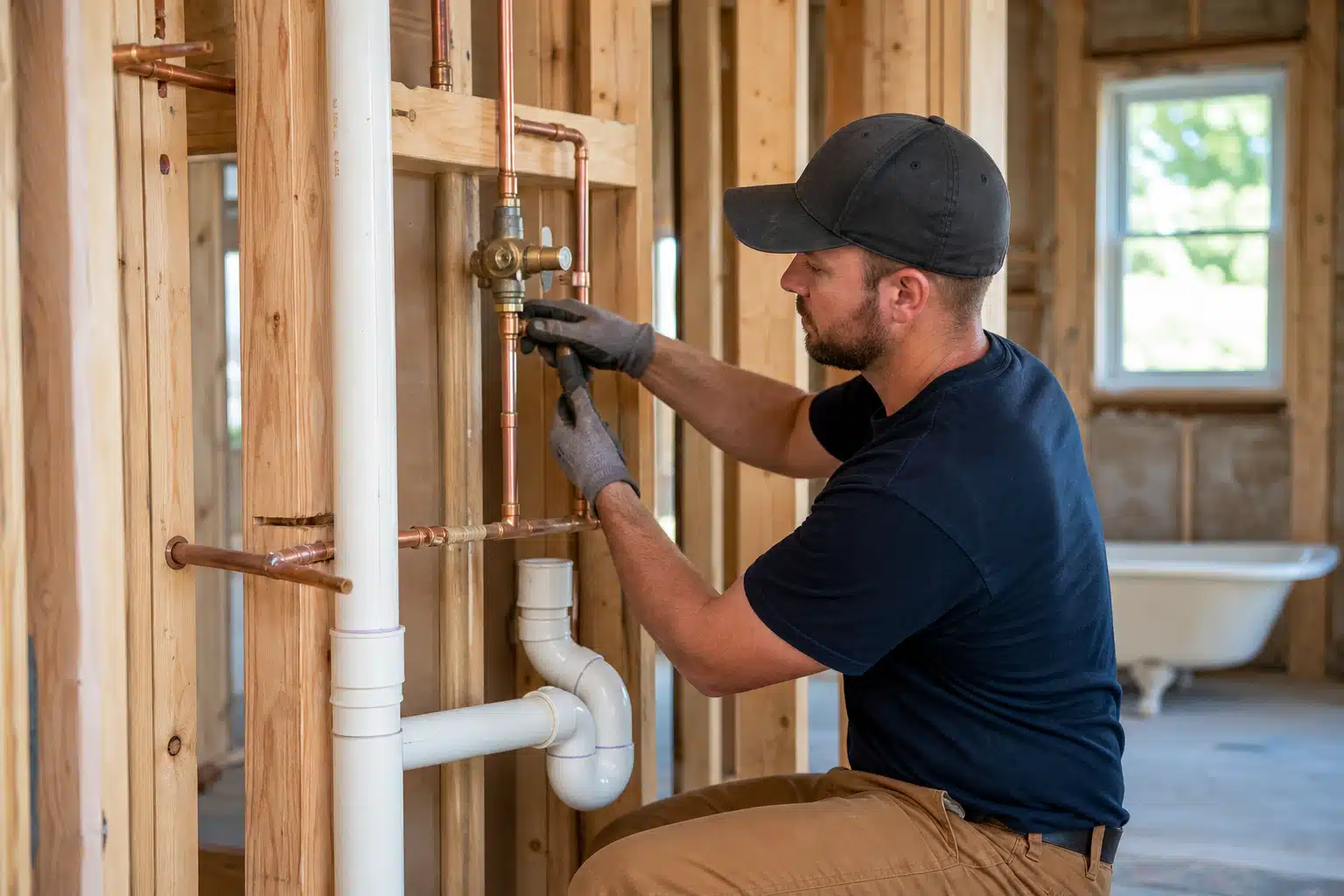
What the Rough-In Phase Actually Involves
Drain line work. Drain lines need to run below the subfloor to the stack. In Atlanta homes built before the 1990s, expect cast iron drain lines — functional but not easily modified. Code minimum slope is 1/4 inch drop per foot of horizontal run. In tight floor cavities — common in older Buckhead, Inman Park, or Virginia-Highland homes — getting the right slope sometimes requires creative routing.
Supply line rough-in. Hot and cold supply lines terminate at the right height for vanity faucets, shower valves, and tub fillers. This is also where shower valve rough-in bodies are installed — choose your brand before rough-in since the body is brand-specific and can’t be easily changed after tile.
Inspections before close-up. City of Atlanta requires a rough-in inspection before walls close. Don’t tile over uninspected rough-in work.
The Shower: Where Most Complications Occur
Pan vs. tile shower floor. Prefab shower pans sit on top of the existing subfloor — minimal plumbing work. Tile shower floors require a drain set at the correct height relative to the finished floor, built up with a mortar bed.
Slab homes (common in Atlanta’s post-WWII suburbs). Moving a shower drain in a slab-foundation home means cutting concrete, rerouting the drain line, and patching. It’s done regularly — but it adds time and should be budgeted honestly.
Waterproofing behind tile. The waterproof membrane is the last defense against water damage. The right installation uses a certified membrane (Schluter KERDI, RedGard, or similar) across all wet surfaces. We see tile failures in 10-year-old Atlanta showers that were installed over greenboard.
Permits in Atlanta: What Triggers One
Requires a permit: Any drain line extension or rerouting, adding a new fixture, moving any existing fixture to a new location.
Does not require a permit: Replacing a toilet, faucet, or showerhead in the same location; replacing a vanity with the same supply/drain configuration.
We pull all required permits as the licensed contractor.
Common Surprises in Atlanta Bathrooms
Pre-1960s intown homes (Druid Hills, Virginia-Highland, Grant Park): Cast iron drains and galvanized supply lines. Galvanized corrodes from the inside out — brownish-orange water is the telltale sign. These homes are often worth discussing a partial repipe during bathroom work.
1970s–1980s suburban construction (Dunwoody, Smyrna, Tucker): Higher likelihood of polybutylene supply lines — the gray flexible pipe discontinued after settlement litigation. A remodel is a logical time to replace what’s accessible.
1990s–2000s construction: Generally PVC/ABS drains and copper or PEX supply lines. More straightforward and less likely to need additional remediation.
What to Expect from Fix & Flow
- Pre-construction walkthrough: We assess existing plumbing, identify what needs to move, and give you a clear cost picture before demo starts.
- Rough-in coordination: We work directly with your general contractor or tile installer on sequencing.
- Permit management: We pull all required permits and schedule inspections.
- Trim-out: After tile and finish work, we return to install all fixtures.
If you’re planning a bathroom remodel and want a plumbing-specific assessment, call us at (404) 800-3569 or schedule a site visit. Knowing what’s behind the walls before demo starts is worth the service call fee.
See our full Bathroom Remodeling page for more on what we offer.