 Skip to content

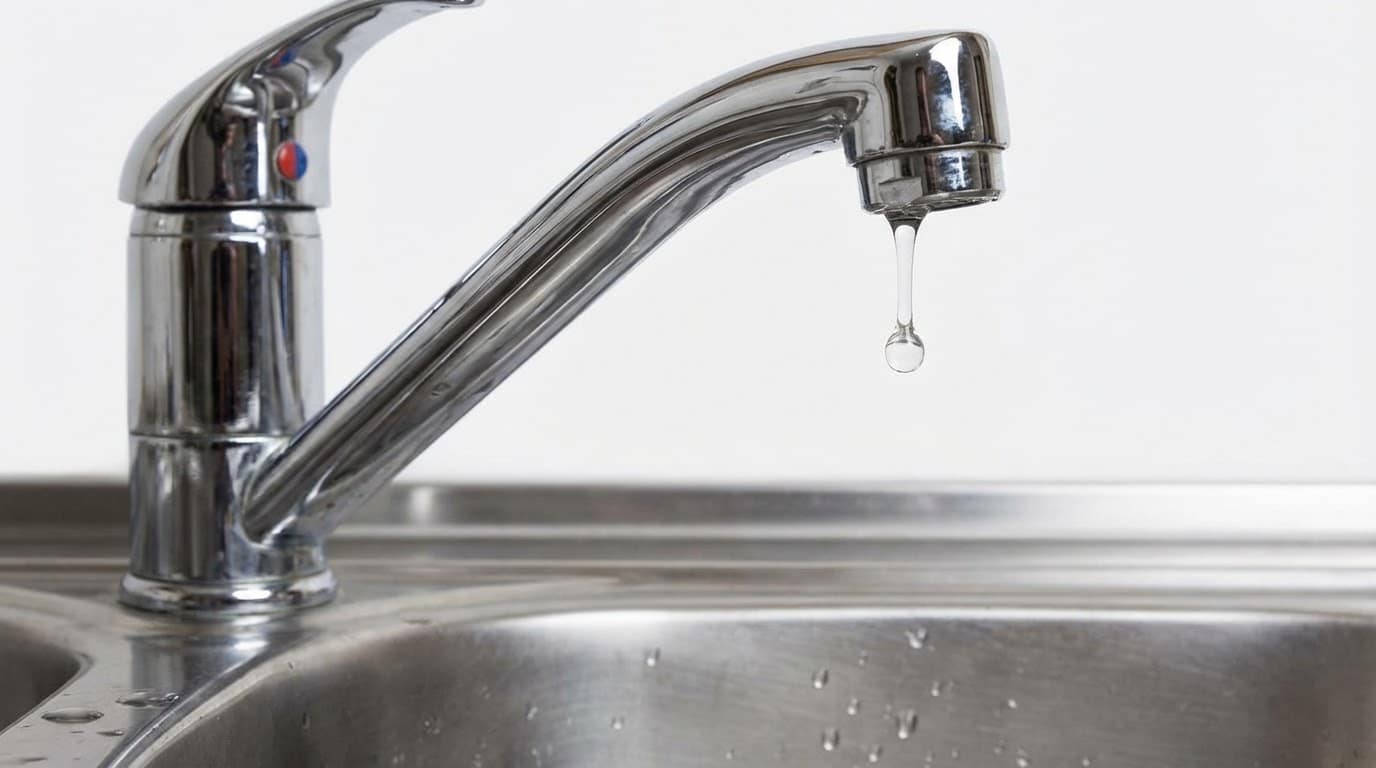
A faucet only drips when the internal seal fails.
Inside every faucet, there are small components designed to control water flow and pressure. Over time, friction, mineral buildup, and water pressure slowly wear these parts down. Once the seal is compromised, water finds a way through even when the tap is off.
The result: a constant drip. According to plumbing studies, a single dripping faucet can waste over 3,000 gallons of water per year. That’s not just wasteful, it’s expensive.
Let’s break down the real causes.
1. Worn-Out Washer: A Common Cause of Dripping Faucets
This is the most common reason behind a leak, especially in compression faucets.
Every time you turn the handle, the washer presses against the valve seat to stop water flow. Over time, this repeated friction causes the washer to:
- Flatten
- Crack
- Lose its sealing ability
Once that happens, water slips through.
How to fix it:
- Turn off the water supply
- Disassemble the faucet
- Replace the washer with the correct size
It’s a simple, low-cost fix, but only if you catch it early.
2. Damaged O-Ring and Its Role in Faucet Leaks
The O-ring is a small rubber ring that keeps the faucet handle sealed and stable. When it wears out or loosens:
- Water starts leaking near the handle
- Drips may appear at the spout
This is common in cartridge-style faucets.
Why it fails:
- Age and rubber degradation
- Mineral buildup
- Improper installation
Fix:
Replace the O-ring. It’s inexpensive and usually quick, but you’ll need the exact size to avoid repeat leaks.
3. Corroded Valve Seat and How It Leads to Drips
The valve seat connects the faucet to the spout. It’s where water pressure is controlled. Over time, sediment in the water causes:
- Corrosion
- Pitting
- Uneven surfaces
Once the surface is no longer smooth, the seal breaks and water leaks through.
Signs:
- Persistent dripping even after washer replacement
- Rough or gritty feel when turning the handle
Fix:
- Clean the valve seat using a seat grinder tool
- Replace it if corrosion is severe
Ignoring this can damage other internal parts.
4. Loose or Broken Parts Inside the Faucet
Faucets aren’t just one piece. Inside, there are multiple small components working together. If any of these become:
- Loose
- Misaligned
- Cracked
You’ll start seeing leaks.
Common culprits:
- Packing nuts
- Screws
- Internal seals
Fix:
- Tighten loose parts carefully
- Replace broken components
Be careful not to overtighten, which can cause more damage.
5. High Water Pressure Causing Faucet Drips
This one surprises most homeowners. Even if your faucet is in good condition, high water pressure can force water through small openings, causing intermittent dripping.
Signs of high pressure:
- Dripping mostly at night
- Noise in pipes (water hammer)
- Multiple fixtures leaking
Fix:
- Install a pressure regulator
- Keep pressure between 40–60 psi
Unchecked pressure doesn’t just cause drips, it shortens the life of your entire plumbing system.
6. Faulty Cartridge in Modern Faucets
Modern faucets use cartridges instead of traditional washers. These cartridges control:
- Water flow
- Temperature mixing
When they fail:
- Dripping becomes constant
- Handle may feel stiff or loose
Why cartridges fail:
- Mineral buildup
- Wear over time
- Poor-quality components
Fix:
Replace the cartridge with a compatible model. This is usually a straightforward repair if you have the right part.
7. Problems with the Faucet Handle or Installation
Sometimes the issue isn’t inside the faucet, it’s how it was installed. Improper installation can cause:
- Misalignment
- Uneven pressure on seals
- Gradual loosening over time
Loose handles also prevent proper shut-off.
Fix:
- Tighten the handle
- Reinstall components correctly
- Ensure all parts are aligned
If the faucet was installed incorrectly from the start, the problem may keep coming back.
8. Mineral Buildup from Hard Water
Hard water contains high levels of calcium and magnesium. Over time, these minerals:
- Build up inside the faucet
- Block proper sealing
- Damage internal components
Signs:
- White or chalky residue
- Reduced water flow
- Frequent leaks
Fix:
- Soak parts in vinegar to dissolve buildup
- Install a water softener if the issue is severe
This is a long-term problem that affects more than just your faucet.
9. Worn Seals Inside the Faucet
Seals work alongside washers and cartridges to keep water contained. When seals degrade:
- Water escapes through small gaps
- Dripping becomes consistent
Causes:
- Age
- Heat exposure
- Chemical reactions with water
Fix:
Replace the seals during routine maintenance or when replacing other parts.
10. General Wear and Tear Over Time
Sometimes, it’s not one issue. It’s everything. Faucets aren’t designed to last forever. After years of daily use, multiple components start failing at once.
Signs:
- Multiple leaks
- Reduced performance
- Frequent repairs needed
Fix:
At this point, replacing the faucet is often more cost-effective than repairing it repeatedly.
DIY Fixes to Stop a Dripping Faucet
If you’re comfortable with basic tools, many faucet issues are fixable.
Basic steps:
- Turn off the water supply
- Plug the drain (to avoid losing small parts)
- Disassemble the faucet carefully
- Inspect washers, O-rings, and cartridges
- Replace damaged components
- Reassemble and test
Tools you’ll need:
- Adjustable wrench
- Screwdriver
- Replacement parts
- Plumber’s grease
Important:
Always match replacement parts exactly. Even a small size difference can cause leaks.
If the issue is connected to a larger plumbing problem, like pipe damage or installation errors, it may be smarter to look into professional help such as sink repair in atlanta to avoid repeated failures.
When to Call a Plumber for a Dripping Faucet
Not every drip is a DIY job. You should call a professional if:
- The leak continues after replacing parts
- There’s corrosion deep inside the faucet
- Water pressure is too high
- Multiple fixtures are leaking
- You notice water damage under the sink
A persistent leak can indicate bigger issues in your plumbing system, including problems that may also affect your shower or tub. In those cases, services like shower repair in atlanta can help diagnose the root cause.
If your bathroom fixtures are outdated or failing frequently, it may be worth considering a full upgrade through bathroom renovation in atlanta to improve efficiency and prevent future leaks.
Final Thoughts
A dripping faucet is never just a small problem.
It’s a signal. Whether it’s a worn washer, high water pressure, or internal corrosion, the sooner you fix it, the less damage it causes. Most issues start small but escalate quickly if ignored.
Fixing a drip early saves water, reduces costs, and extends the life of your plumbing system. And sometimes, the smartest move isn’t another quick fix, it’s solving the root problem properly.