
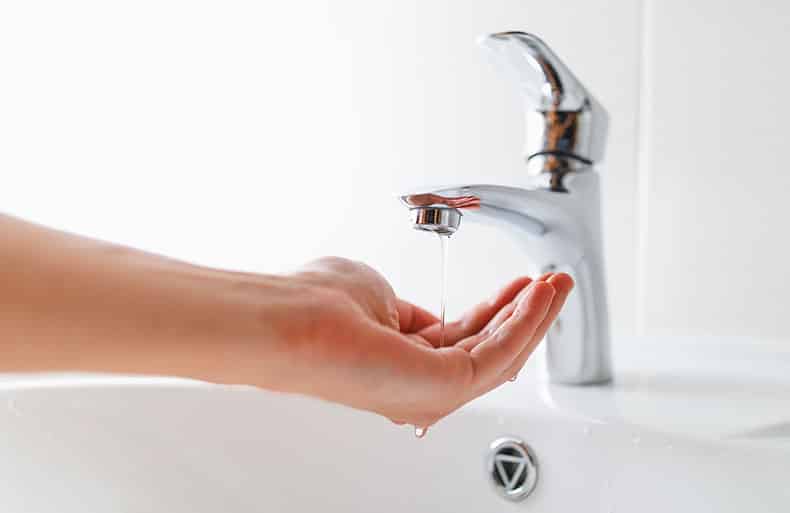
Most of us know the frustration that comes when home water pressure problems interrupt our routines, whether we’re starting our day with a shower, doing dishes, or watching a tub or sink take much longer than usual to fill. You may also notice that a washing machine or dishwasher is taking much longer than usual to complete a cycle.
Low water pressure in a home can stem from various issues, ranging from isolated fixture problems to whole-house system failures. Common causes include clogged faucet aerators, broken toilet fill valves, a faulty water pressure regulator, or partially closed water shut-off valves. Additionally, older homes with galvanized steel pipes may experience low pressure due to corrosion and scale buildup over decades, which can significantly restrict water flow.
Low water pressure can be caused by a variety of issues in your home’s plumbing. Most can be resolved fairly easily, but first you have to identify what might be causing the low water pressure. Here are a few things you can check to identify common water pressure problems in your home:
Whole House vs. Individual Fixture
The first thing you can do is determine how many water lines are affected by low pressure. You probably have at least one fixture that made you aware of the issue. To determine whether or not this is isolated, check each of the remaining faucets, shower heads, and toilets in your home, and take note of any that seem to have low water pressure.
Often, if it is a single fixture, you may be facing a clogged or damaged pipe, a faucet aerator issue, or a broken toilet fill valve. In these cases, professional toilet repair may be necessary to restore proper function. With larger machines, an issue with water supply hoses can also contribute to low pressure. If any of your other faucets have low water pressure, you can take additional steps to identify the cause.
Water Pressure Regulator
A common issue many homeowners face is a broken or faulty pressure regulator. This is a valve designed to keep water pressure at a safe level. When these fail, you might encounter a significant decrease or even increase in water pressure. If this valve fails, you’ll most likely notice a sudden change in pressure throughout your house.
Water Shut-Off Valves
In the majority of homes, there are two major shutoff valves that control the flow of water to a home—the water meter valve and the main shutoff valve. Usually found outside the home or an interior utility area like a garage, you won’t normally use the water meter valve. It’s designated only for use by your water provider, but if you’ve had work done on your home recently, you may want to check this valve. Similarly, your main shutoff valve is sometimes left closed after a repair has been done to your water system. This valve is commonly found inside the house, near where the main water supply enters the home.
Pipe Corrosion
If you live in an old home, you might have galvanized steel pipes. Over decades, corrosion and scale buildup can render these pipes effectively useless. Unfortunately, there isn’t an easy (or inexpensive) way to identify or resolve corroded steel pipes. But something may be wrong if you have steel pipes and find that running more than one faucet in your home drastically reduces water pressure. Most often, this will require re-piping the water system.