
 Skip to content

Swap a constantly heated storage tank for a tankless system that only heats water when you need it. For Atlanta homeowners, that translates to meaningful energy savings, lower monthly bills, and virtually endless hot water — all while reclaiming valuable floor space. This guide explains why more local homeowners are choosing tankless: energy efficiency, available incentives, on-demand hot water, compact footprints, longer service life, straightforward installs, simple upkeep, and environmental benefits. Plus, see how Fix and Flow’s professional installation and ongoing support keep your system efficient and dependable.
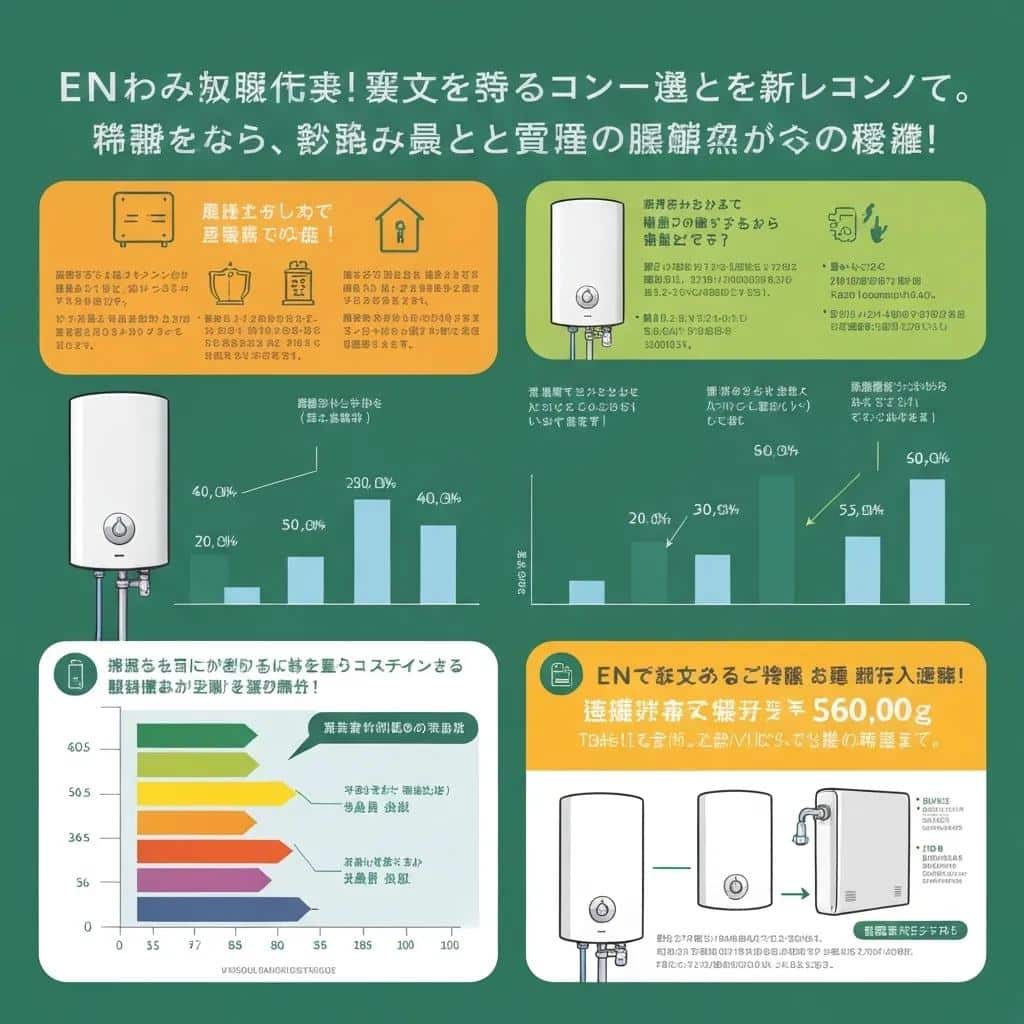
Tankless water heaters warm water the instant you open a tap, eliminating the standby energy loss of keeping a large tank hot around the clock. In Atlanta homes with typical daily usage, that approach can reduce energy use by up to 34 percent — a noticeable difference on your utility bills all year long.
Key reasons tankless systems save energy:
Those efficiency gains lower operating costs and help homeowners meet environmental goals — and they make it worth checking local incentives.
Research from the U.S. Department of Energy and the Environmental Protection Agency shows that tankless water heaters can cut energy consumption by 24% to 34% for homes using less than 41 gallons of hot water daily. For households with higher hot water demands, savings typically range from 8% to 14%.
These figures underscore the real energy and bill-saving potential tankless systems deliver for Atlanta homeowners.
Georgia homeowners have several cost-saving options to consider when upgrading to tankless:
Homeowners installing qualifying high-efficiency natural gas tankless water heaters might be eligible for a federal energy tax credit of up to $600, valid through December 31, 2025. Additionally, Atlanta Gas Light provides a $300 rebate for installing new natural gas tankless water heaters that meet specific efficiency standards.
When combined, these incentives can shave 20–30 percent off upfront costs, making a tankless upgrade more affordable and practical.
Tankless units use flow sensors and efficient burners or heating elements to heat water as it moves through the system. Unlike storage tanks that can run dry, tankless heaters deliver:
That on-demand performance makes tankless systems an excellent fit for busy families or homes with overlapping hot-water needs.
Sleek wall-mounted tankless units free up floor space in basements, closets, and garages. Compare typical footprints and install flexibility between tankless units and traditional tanks:
| Installed Unit | Space Required (sq ft) | Installation Flexibility |
|---|---|---|
| Tankless Heater | 2 × 1 | Mounts easily on any solid wall |
| 50-gal Storage Tank | 3 × 2.5 | Needs dedicated floor space |
That compact form factor opens design possibilities and makes renovations easier — next up, durability and expected lifespan.
Tankless systems often run for 20 years or more — roughly double the life of many storage tanks — thanks to less corrosion and lower scale buildup. Homeowners benefit from:
Tankless water heaters generally offer a longer operational life, often exceeding 20 years with proper care. This is nearly double the average 10-15 year lifespan of traditional storage tank water heaters, meaning less frequent replacements and better long-term value.
The extended service life makes professional installation and routine maintenance worthwhile investments to keep your system running well for decades.
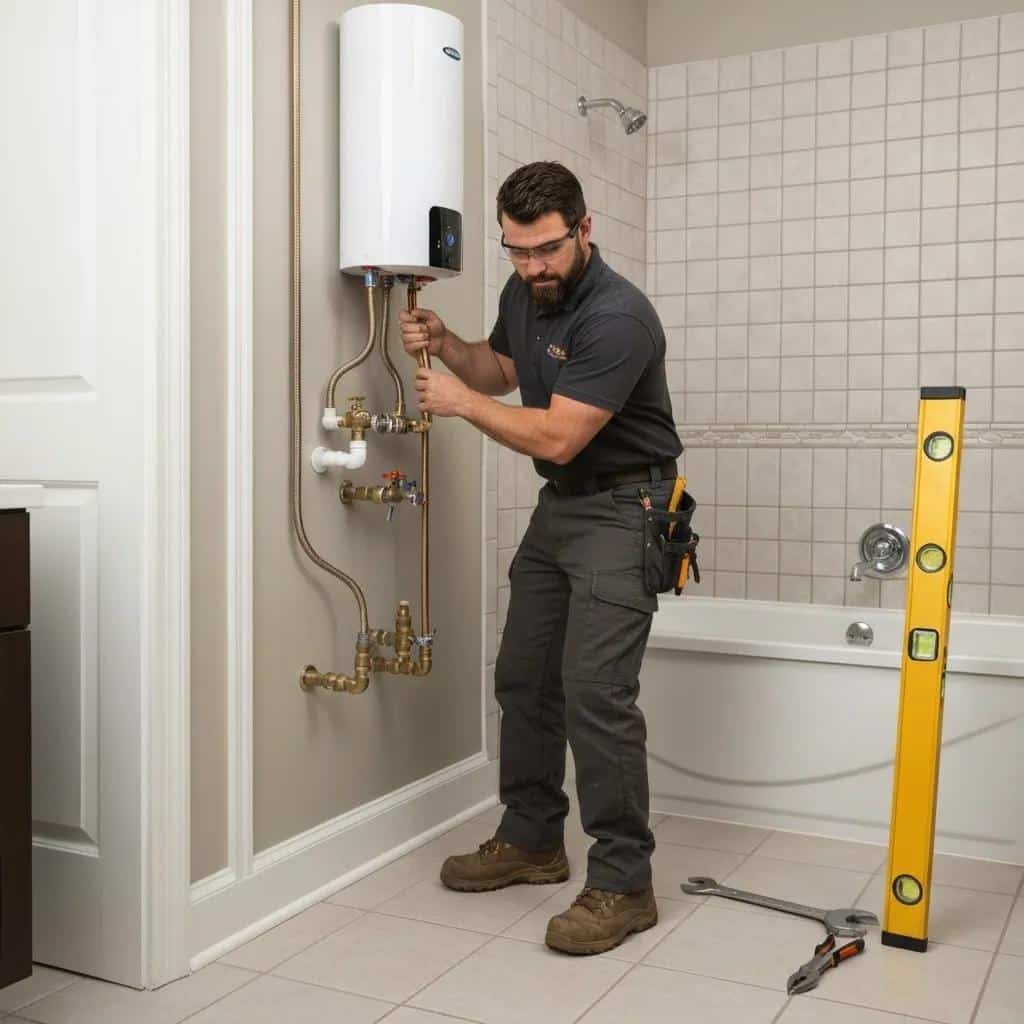
A professional installation usually follows these steps to ensure safety and peak performance:
Clear communication at every stage helps you understand timing and costs — and why hiring a certified installer matters.
Certified plumbers make sure venting, pressure settings, and code requirements are correct. Poor installation can cause: issues handled by a plumbing services.
Professional installation protects your investment, performance, and safety.
Costs vary by fuel type, unit size, and any necessary home upgrades. Common cost components include:
| Cost Component | Estimated Range |
|---|---|
| Basic Tankless Unit (Gas or Electric) | $800 – $1,500 |
| Installation Labor and Permits | $1,200 – $2,500 |
| Fuel Line or Electrical Upgrades | $300 – $1,000 |
Most installations total between $2,300 and $5,000, though rebates and long-term energy savings often offset that initial investment.
Annual flushing and descaling remove mineral buildup and keep the heat exchanger working efficiently. Typical maintenance steps include:
Regular service preserves efficiency and helps your unit reach 20+ years of reliable operation.
Watch for these signs that professional service is needed:
Addressing problems early prevents bigger, costlier repairs down the road.
Fix and Flow’s certified technicians diagnose and repair common tankless problems quickly, offering:
Transparent pricing and local knowledge help keep your tankless system reliable and efficient.
Tankless models avoid standby heat loss, which boosts overall efficiency:
The table below highlights the main performance differences:
| Feature | Tankless | Storage Tank |
|---|---|---|
| Standby Heat Loss | None | 10%–20% |
| Efficiency Rating (UEF) | 0.82–0.96 | 0.60–0.70 |
| Potential Annual Savings | $100+ (gas) | N/A |
These differences make tankless systems a strong choice for energy- and cost-conscious homeowners.
Traditional storage tanks usually last 10–15 years before corrosion or leaks become issues. With regular maintenance, tankless units commonly exceed 20 years, cutting replacement frequency and long-term costs.
Choosing tankless brings both design and environmental upside:
Together, these benefits improve comfort while reducing a home’s environmental footprint.
Because they heat only when needed, tankless units cut overall fuel use and associated CO₂ emissions:
This on-demand approach helps homeowners meet sustainability goals and supports broader climate initiatives.
Without stored water, tankless systems avoid stagnation, rust, and sediment buildup. Cleaner hot water means:
Improved water purity complements the system’s energy and cost benefits.
On-demand heating reduces waste tied to waiting for a tank to warm up:
Those savings enhance the system’s overall resource-efficiency profile.
Fix and Flow knows Atlanta’s plumbing codes, venting rules, and utility programs. Our certified plumbers:
We make upgrades simpler and protect your investment by:
Local customers praise our responsiveness and professional workmanship:
Tankless water heaters give Atlanta homes a strong mix of energy savings, continuous hot water, and space efficiency. Rely on Fix and Flow for professional installation and expert maintenance that preserve performance, safety, and long-term value. With local incentives and lower operating costs, switching to tankless is a smart, sustainable investment in comfort. Contact us today to upgrade your home’s hot water system.