
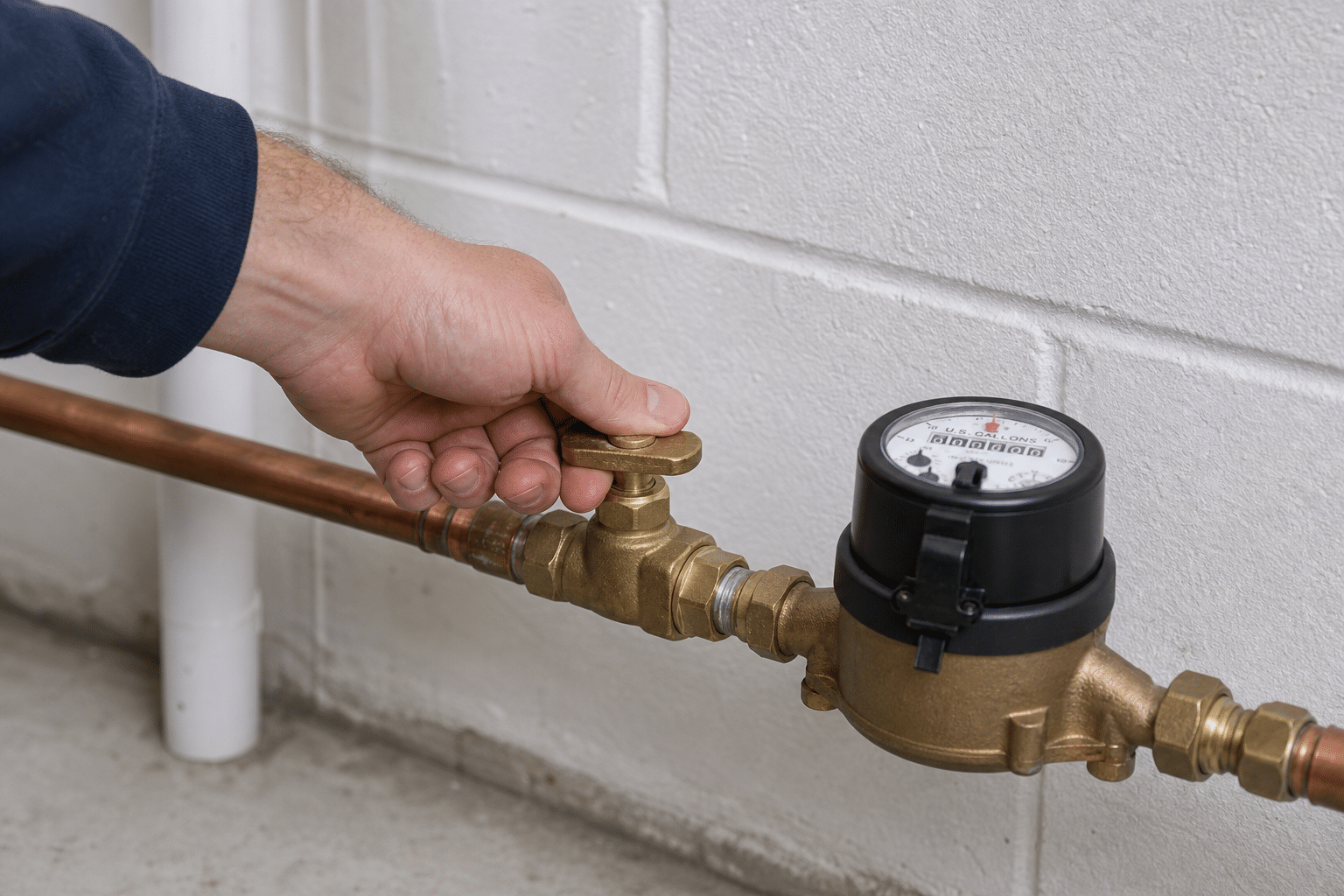
Ask most Atlanta homeowners where their main water shut-off valve is and you’ll get a blank stare. It’s understandable — you only need it in an emergency, and emergencies are rare. But when a pipe bursts, a toilet supply line fails, or a washing machine hose lets go, knowing exactly where that valve is and how to operate it can prevent thousands of dollars in water damage.
This guide will help you find yours before you need it.
Why Every Homeowner Needs to Know This
Water flows at significant pressure through your home’s supply lines — typically 40–80 PSI. If a line fails, that pressure drives water into your home continuously until someone stops it. The faster you get to the shut-off, the less damage you sustain. In an active water emergency, every 30-second delay adds water you’ll have to extract later.
Types of Shut-Off Valves
There are two main types of shut-off valves you might find:
- Ball valve — A lever handle that turns 90 degrees from fully open (lever parallel to pipe) to fully closed (lever perpendicular to pipe). Ball valves are common in homes built or replumbed after the 1990s. They’re reliable and easy to operate quickly.
- Gate valve — A round wheel handle that requires multiple full turns to open or close. These are older and more common in pre-1990s Atlanta homes. They can corrode in the open position over years of non-use, making them hard to turn when you actually need them.
If you have an old gate valve on your main shut-off, consider asking your plumber about replacing it with a ball valve — it’s a straightforward task during any service visit.
Where to Find the Main Shut-Off in Atlanta Homes
Slab Foundation Homes
Very common in Atlanta’s suburban developments and many Intown neighborhoods. The water line typically enters through the concrete slab, and the main shut-off is usually found:
- In a utility closet, laundry room, or mechanical room
- In the garage near the water heater
- Under the kitchen sink (less common for the main, but possible)
Crawl Space Homes
Older Atlanta bungalows and many mid-century homes have crawl spaces. The main shut-off is often:
- Just inside the crawl space access point, near where the supply line enters
- In a small utility area near the water heater
Basement Homes
Less common in Atlanta than in northern cities, but present in some neighborhoods. Main shut-off is almost always on the wall near where the water line enters the basement, toward the street side of the house.
The Street-Side Shut-Off
Every Atlanta home also has a shut-off at the water meter near the street, in a buried box with a metal or plastic lid near the curb. You can operate it with a meter key tool or channel-lock pliers. This is your backup if the interior main valve is stuck or inaccessible. Fulton County Water Resources, DeKalb County Watershed, and the City of Atlanta’s Department of Watershed Management each manage meters in their respective service areas.
Fixture Shut-Off Valves
Beyond the main, individual fixtures have their own shut-offs:
- Toilets — Small oval valve on the supply line behind/beside the toilet. Turn clockwise to close.
- Under-sink faucets — Usually two valves (hot and cold) on the supply tubes under every sink.
- Water heater — Cold water inlet valve at the top of the tank.
- Washing machine — Individual valves for the hot and cold supply hoses, typically on the wall above the machine.
- Refrigerator ice maker — Small valve on the cold water supply line, often in the cabinet below or near the refrigerator.
Test Your Valves Annually
Valves that haven’t been operated in years can seize or corrode. Once a year, operate each accessible shut-off valve — open it, close it, open it back up. This keeps the mechanism working. During a routine plumbing inspection, Fix & Flow checks all accessible valves and flags any that are failing.
Make a Shut-Off Map for Your Home
Once you’ve located all your valves, take a photo of each one. Share the locations with family members or house-sitters. Labeling valves with masking tape is also helpful in mechanical rooms where multiple pipes run together.
Questions About Your Plumbing Setup?
If you’re not sure where your valves are or if any are in questionable condition, Fix & Flow can assess your plumbing during any service visit. Contact us or book a visit to get a clear picture of your home’s plumbing.