
 Skip to content
A sewer scope inspection—sometimes called a sewer camera inspection—uses a small, flexible camera to look inside your home’s sewer line so you can spot defects, blockages, or structural damage before they become expensive emergencies. This guide explains how a sewer scope works, why Atlanta homes face more tree‑root and aging‑pipe issues, and how early detection saves money and strengthens a buyer’s negotiating position. You’ll get a clear step‑by‑step of the inspection process, the common problems a CCTV drain camera uncovers, realistic local cost ranges for Atlanta, and practical next steps if issues appear. We also cover what to expect after the inspection—live video, saved footage, and a written report—and the usual repair options, from hydro jetting to trenchless fixes. Keywords like sewer scope inspection Atlanta, sewer line camera inspection, and inspect sewer line with camera are included to help you find practical, local guidance.
A sewer scope inspection sends a flexible CCTV drain camera through the main sewer line and records continuous video of the pipe interior. The footage reveals roots, cracks, offsets, blockages, and other damage, so homeowners and buyers can see exactly what’s wrong and decide on repairs or negotiation strategy. In Atlanta, mature trees, mixed pipe materials, and seasonal ground movement increase the risk of root intrusion and joint failure—making sewer scopes a smart preventive step. The next section describes the camera tools and the typical report you’ll receive after an inspection.
Sewer scope inspections create objective records that help with maintenance planning, real estate transactions, and emergency triage. The recorded footage and an annotated report travel with the property’s history—contractors and buyers can use them to scope repairs and estimate costs. Understanding how the camera captures and reports data makes it easier to read the findings and prioritize next steps when problems show up.
Here are the main homeowner benefits of a sewer scope inspection:
Those benefits make a sewer scope a sensible first step. The section below walks through the camera technology and the live reporting used during an inspection.
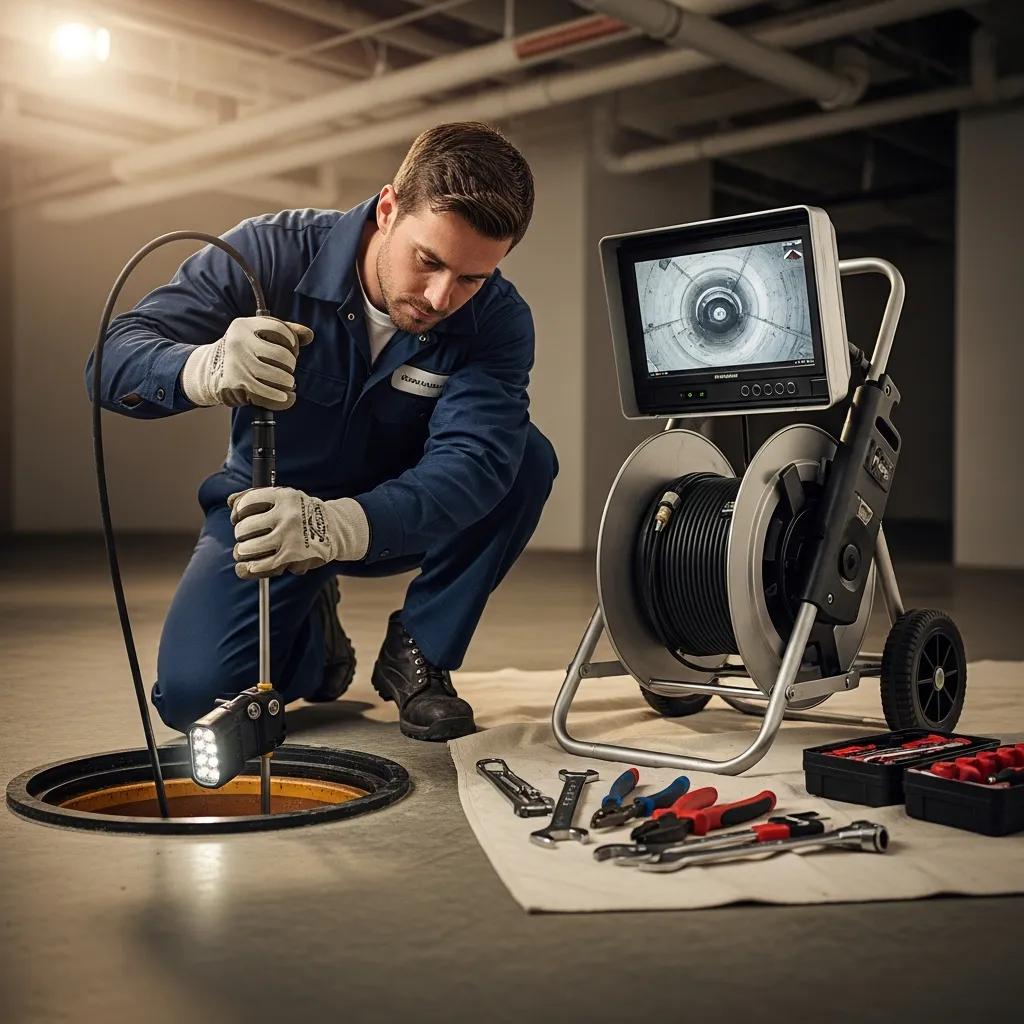
An inspection starts by locating a cleanout or other accessible entry, then inserting a pushrod‑mounted CCTV camera inside a protective housing into the main sewer line. The camera sends a live video feed that the technician monitors and records. Most rigs include a sonde (a small transmitter) so the technician can trace the pipe path and mark lateral connections above ground. The tech advances and withdraws the camera while recording continuous footage, captures annotated stills, and prepares a written summary that notes defects and footage locations. Because the method is non‑invasive, it reduces exploratory digging and lets technicians recommend precise solutions based on what they see. That recorded video is useful for repair planning and for real estate negotiations.
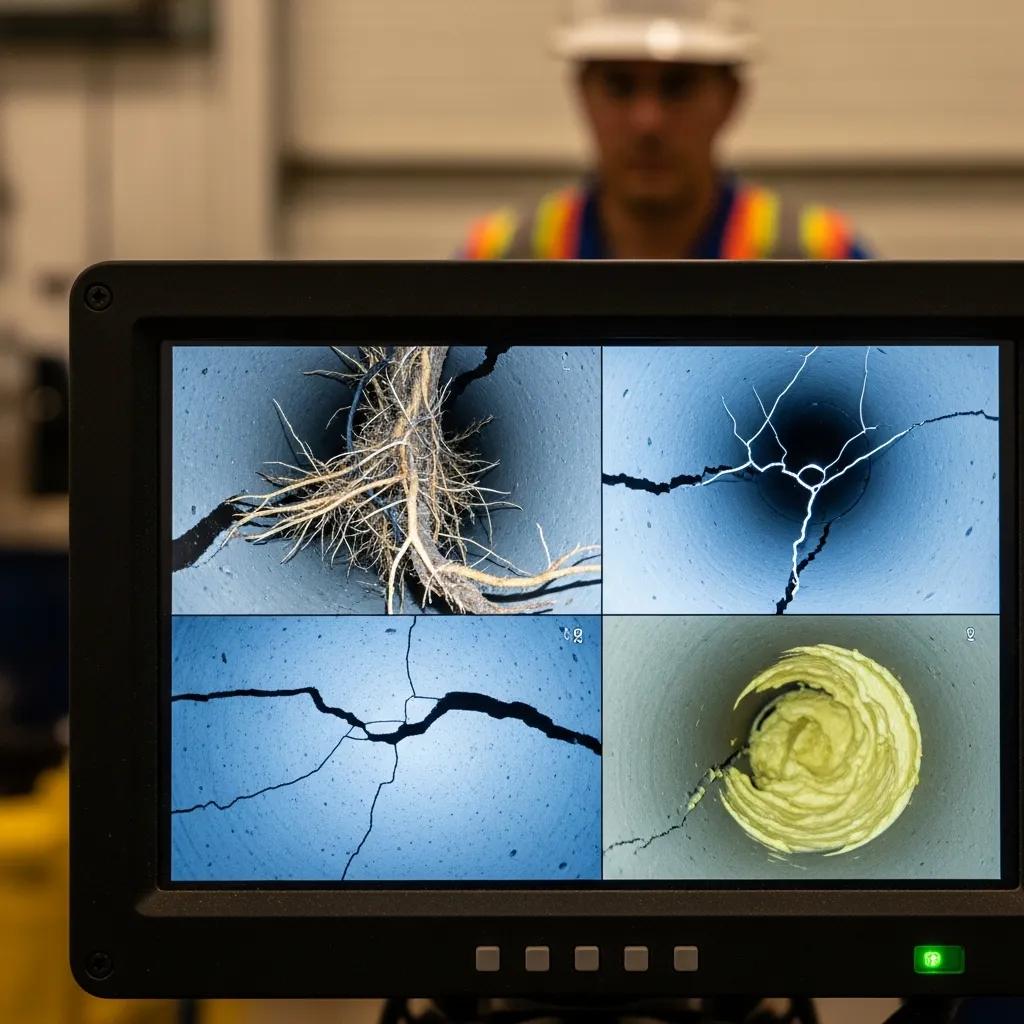
A sewer scope reveals many defects that commonly affect residential lines: root intrusion, pipe offsets, cracks, bellies (sagging), grease and debris buildup, and collapsed sections from corrosion or shifting soil. Each issue has a recognizable video signature—roots look like dark filaments at joints, bellies show pooling and slow flow—so technicians can grade severity and recommend urgency. Early detection opens up options like hydro jetting for soft blockages, mechanical root cutting and treatment for roots, or trenchless lining for localized structural repairs. The next section compares the most common issues, how they look on camera, and typical repair options so homeowners can prioritize responses.
Most home sewer scopes find four main problem types that affect flow and pipe integrity: tree root intrusion, blockages and grease buildup, structural cracks and offsets, and sagging (bellies) from soil movement. Each carries different risks—from recurring backups to full collapse—and inspection reports usually include recommended next steps and a severity rating. Recognizing the visual signs helps homeowners understand the camera findings and why a specific repair is recommended. Below is a quick comparison of common defects, their camera signs, and typical remediation approaches.
| Defect Type | Visible Signs on Camera | Typical Repair Approach |
|---|---|---|
| Tree root intrusion | Dark filaments entering joints; partial blockage | Mechanical root cutting and hydro jetting; root barrier or spot repair if the pipe is damaged |
| Grease and debris buildup | Soft clumps, narrowed pipe diameter, slow‑flow areas | Hydro jetting and a scheduled maintenance plan |
| Cracks / offsets | Linear fractures, separated joints, visible gaps | Spot repair or trenchless lining depending on severity |
| Sagging (belly) | Pooling, slow flow, a low spot in the pipe invert | Pipe releveling or trenchless replacement for severe cases |
This comparison shows how video findings translate into action: soft blockages are often cleared conservatively, while structural failures usually need more extensive intervention. The next subsection digs deeper into root intrusion and repair choices.
Tree roots take advantage of joints, hairline cracks, and porous pipe materials to enter sewer lines. Once inside they thicken, trap debris, and gradually restrict flow until backups occur. On camera, root intrusion appears as radial filaments or mats anchored at joints and can be graded from nuisance to fully blocking. For minor intrusion, mechanical root cutting followed by hydro jetting and a maintenance schedule can restore flow; repeated or destructive intrusion may require section replacement or trenchless relining. Homeowners should weigh the value of shade trees against repair scope—early detection gives the best chance for less invasive fixes.
Cracks and collapses show as sharp discontinuities, missing pipe segments, or sudden changes in pipe shape on camera—often with soil intrusion or standing water. Sagging (bellies) appears as persistent pooling and slow drainage at a low point, which traps solids and accelerates failure. Fixes depend on severity: small longitudinal cracks may be relined with cured‑in‑place pipe (trenchless lining), while collapsed sections usually require excavation and replacement. If footage shows active infiltration or rapid deterioration, plan repairs promptly to avoid property damage.
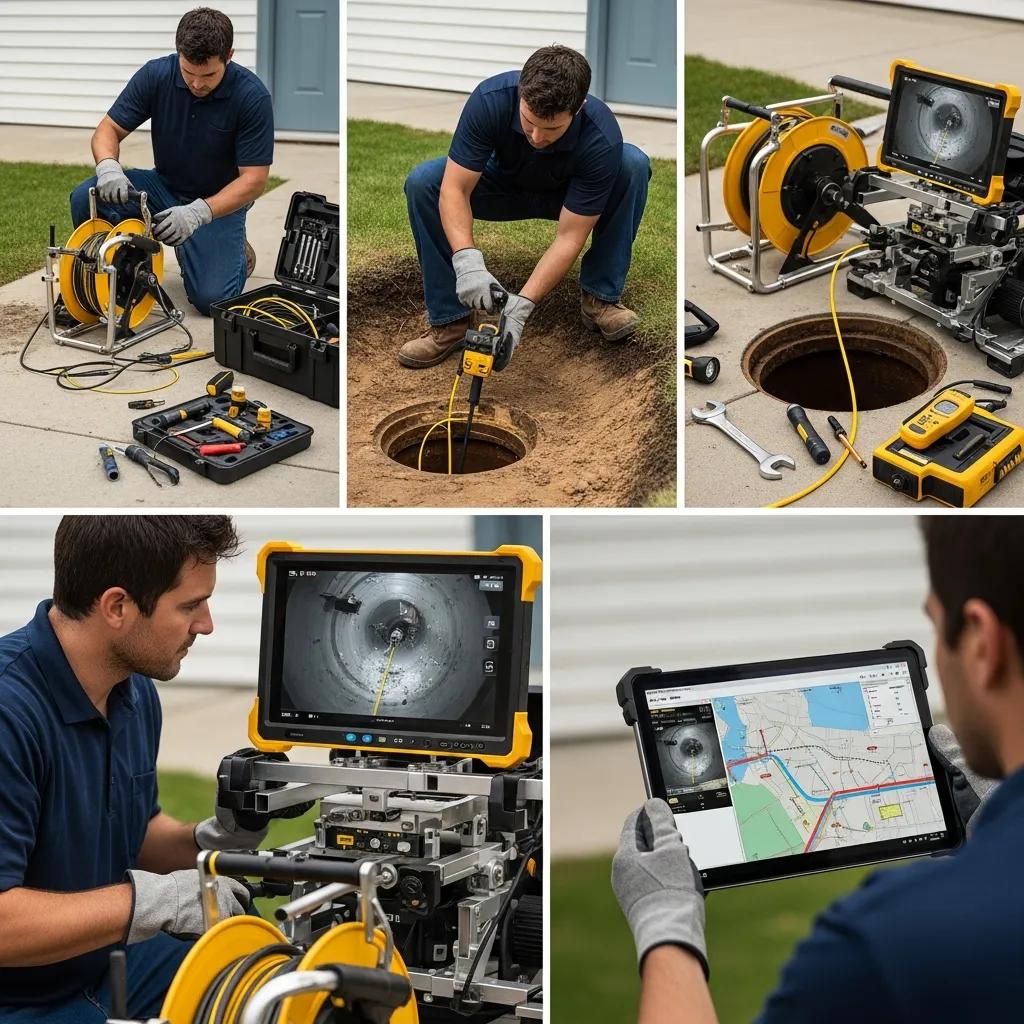
A typical Atlanta sewer scope inspection follows a straightforward sequence: pre‑inspection prep and access check, camera insertion with a live video run, sonde locating, and delivery of an annotated written report with the footage. This workflow gives you both a real‑time assessment and the documentation you need for repair planning or real estate purposes.
Local factors—cleanout access, yard landscaping, and pipe material—affect time on site and the inspection sequence. The table below outlines the actions and deliverables homeowners can expect during and after an inspection.
Before the process table: technicians will confirm the interior or exterior cleanout location, explain how the camera run will proceed, and do a quick site check for hazards and parking. Then they perform the camera run, recording continuous video and annotating footage with time markers and sonde location data.
| Step | Required Action | Deliverable |
|---|---|---|
| 1. Pre-inspection setup | Confirm cleanout location, clear access, and brief the homeowner on the process | Arrival notes and an estimated time on site |
| 2. Camera insertion | Insert the CCTV camera and advance through the sewer run while monitoring live video | Continuous video stream and timestamped footage |
| 3. Locating | Use the sonde transmitter to map pipe alignment above ground | Locating data linked to footage markers |
| 4. Reporting | Compile annotated stills, the video file, and a written summary | A deliverable package: video files, images, and a written report |
This breakdown clarifies the practical deliverables: a recorded video for your records, annotated images that highlight defects, and a concise recommendations section for repairs. The next sections explain how to prepare and how footage is stored and shared.
A sewer cleanout is an access point—usually a capped fitting—used to enter the main sewer line. It’s commonly located near the foundation, in the yard, or inside a utility room. Homeowner prep includes clearing plants or stored items around the cleanout, ensuring safe technician access, and telling the inspector about recent landscaping or known underground obstacles. If there’s no cleanout, technicians can use alternate entries like an interior drain or a temporary excavation; those options may affect cost and time. Clear access speeds the inspection and helps keep pricing predictable.
The camera records continuous, high‑resolution footage to a digital file. Technicians capture annotated stills of defects and log footage positions with the sonde locator for above‑ground reference. You’ll receive a package with the full video file, selected images, and a written report summarizing defects, severity, and recommended next steps—useful for repair planning or real estate negotiations. Technicians will explain how to save or share files with contractors; we recommend keeping the footage as a baseline for future comparisons so follow‑up diagnostics are faster if problems recur.
Inspection prices vary by access difficulty, pipe footage, and whether above‑ground locating or multiple entry points are needed. Typical local scenarios include a basic single‑entry mainline run, a longer lateral with locating, and complex access that requires excavation or extra entries. Clear cost guidance helps homeowners weigh inspection fees against potential savings from targeted repairs and avoided emergency replacements.
The table below shows common cost drivers and representative ranges you can expect when scheduling a sewer camera inspection in Atlanta.
| Cost Driver | Attribute | Typical Range / Value |
|---|---|---|
| Single cleanout mainline | Standard access, | $150–$400 |
| Lateral inspection / longer runs | Additional footage; locating sonde required | $300–$700 |
| Complex access / multiple entries | No cleanout or excavation needed | $500–$1,200+ |
These ranges show why inspection costs vary: longer runs and difficult access add labor and equipment time. The summary below explains how spending on an inspection often yields savings by directing the right repair.
When you’re ready to schedule, connect with a local Atlanta plumbing provider to get a written price and plan any needed repairs. For prompt help scheduling or to discuss findings and next steps, Fix & Flow Plumbing Co. accepts calls and online inquiries; their team can explain local pricing and dispatch technicians to perform a sewer camera inspection.
Pricing depends on several variables: whether a cleanout exists and how accessible it is, total pipe footage, the need for above‑ground locating (sonde), and whether multiple entry points or daylight excavations are required. Hard access increases labor and time on site, while long lateral inspections and locating add specialized equipment and operator time. Seasonal demand and emergency scheduling can also affect availability and price. Knowing these factors helps homeowners anticipate extra costs and choose the right inspection scope for their needs.
An inspection reduces uncertainty by showing whether a problem is a soft blockage fixable with hydro jetting or a structural failure that needs trenchless repair or replacement. That clarity lets homeowners pursue the least invasive, most cost‑effective solution. For example, hydro jetting or root cutting can quickly restore function for blockages and avoid excavation, while catching a small crack early can lead to relining that extends pipe life at a fraction of replacement cost. The inspection’s evidence supports accurate estimates from repair contractors and helps prevent surprise costs during repairs.
Fix & Flow Plumbing Co. pairs licensed, local plumbing expertise with diagnostic camera work—and the ability to perform recommended repairs when defects are found. The company holds a Georgia Master Plumbers license (MP209774), is accredited by the Better Business Bureau, and is a Guild Quality member—credentials that show professional standards and a service focus. Fix & Flow offers 24/7 availability and community discounts (10% off for First Responders, Teachers, and Military), giving homeowners trust signals and practical access to emergency response. Here are the main reasons homeowners choose a licensed local plumbing partner for camera inspections.
In addition to sewer scopes, Fix & Flow offers a full range of plumbing services, including tankless water heater installation and repair. Their licensed technicians handle many home plumbing needs so Atlanta residents have one reliable partner for diagnosis and repair.
Those credentials smooth the path from diagnosis to repair, enabling quicker fixes and clearer cost estimates. To discuss inspection options, scheduling, or pricing, call 404-800-3569 to speak with a local technician and request an inspection or estimate.
Fix & Flow holds a Georgia Master Plumbers License (MP209774) and maintains business accreditations like Better Business Bureau acknowledgment and Guild Quality membership—proof of professional standards and customer service systems. These credentials matter because licensed plumbers are accountable to state rules and have the training to interpret camera findings and recommend compliant repairs. For Atlanta homeowners, working with a local, licensed company reduces permitting risk, clarifies warranty expectations, and helps with long‑term maintenance planning. The team’s local focus means technicians know area soils, the tree species that cause root intrusion, and common pipe materials in Atlanta’s housing stock.
Round‑the‑clock availability shortens response time for backups and severe sewer problems, reducing how long your property is exposed to sewage and lowering the risk of secondary damage. Fast scheduling also helps align inspections with real estate timelines or contractor availability, which matters for pre‑purchase or pre‑listing work. Clear communication—arrival windows, written reports, and transparent pricing—reduces uncertainty and helps you choose between immediate repair and monitored action. For urgent situations or after‑hours needs, Fix & Flow’s availability gives homeowners options to address problems quickly and limit damage.
Make sure the cleanout area is clear of plants, debris, or stored items. The cleanout is usually a capped pipe near the foundation or in the yard. Tell the technician about recent landscaping or known underground obstacles. Proper prep can shorten inspection time and lower costs.
Time varies with access complexity, pipe length, and pipe condition. A standard run typically takes 30 minutes to 1.5 hours. More complex jobs—multiple entry points or extensive locating—can take longer. Ask your technician for an estimated timeline before they start.
After an inspection you’ll usually get a digital video file of the run, annotated still images that highlight defects, and a written summary of findings with recommended next steps. That documentation is useful for planning repairs or negotiating during real estate transactions.
Yes. A sewer scope gives buyers clear insight into the sewer line’s condition and can influence purchase decisions. If problems are found, the report provides evidence for negotiating repairs or price adjustments. Sellers can use a pre‑listing inspection to show transparency and potentially speed up the sale.
Skipping a sewer scope can leave you unaware of blockages, structural issues, or progressive failures that later become costly emergencies. Repeated backups can damage property and create health hazards from sewage exposure. Buyers who skip inspection risk unexpected expenses. Early detection often saves time and money.
Consider inspections every 1 to 3 years, especially for older homes or properties with large trees near sewer lines. Regular checks catch issues before they escalate. Also schedule an inspection if you notice slow drains, backups, or as part of a pre‑purchase inspection to confirm sewer health.
Schedule an inspection if you have repeated slow drains, gurgling toilets, backups, or unusual wet spots in the yard—and as part of pre‑purchase or pre‑listing inspections to document pipe condition. Older homes, properties with large trees near sewer lines, or houses with recurring clog issues should prioritize periodic inspections. For buyers, a pre‑purchase sewer scope gives negotiation leverage if defects appear; for homeowners, it informs maintenance and can prevent emergency replacements. If you suspect an acute blockage or sewage backup, schedule an inspection right away to limit damage.
Yes—compared to the potential cost of full sewer replacement or repeated emergency calls, an inspection often delivers strong value. A modest inspection fee can reveal treatable blockages or localized defects suitable for trenchless repairs instead of full replacement. In real estate transactions, the inspection provides evidence for negotiating repairs or price adjustments. For many homeowners and buyers, the peace of mind and financial clarity from recorded footage and an annotated report justify the cost. To move forward, contact Fix & Flow Plumbing Co. at 404-800-3569 to schedule an inspection, get a written report, and review repair options with licensed technicians.