
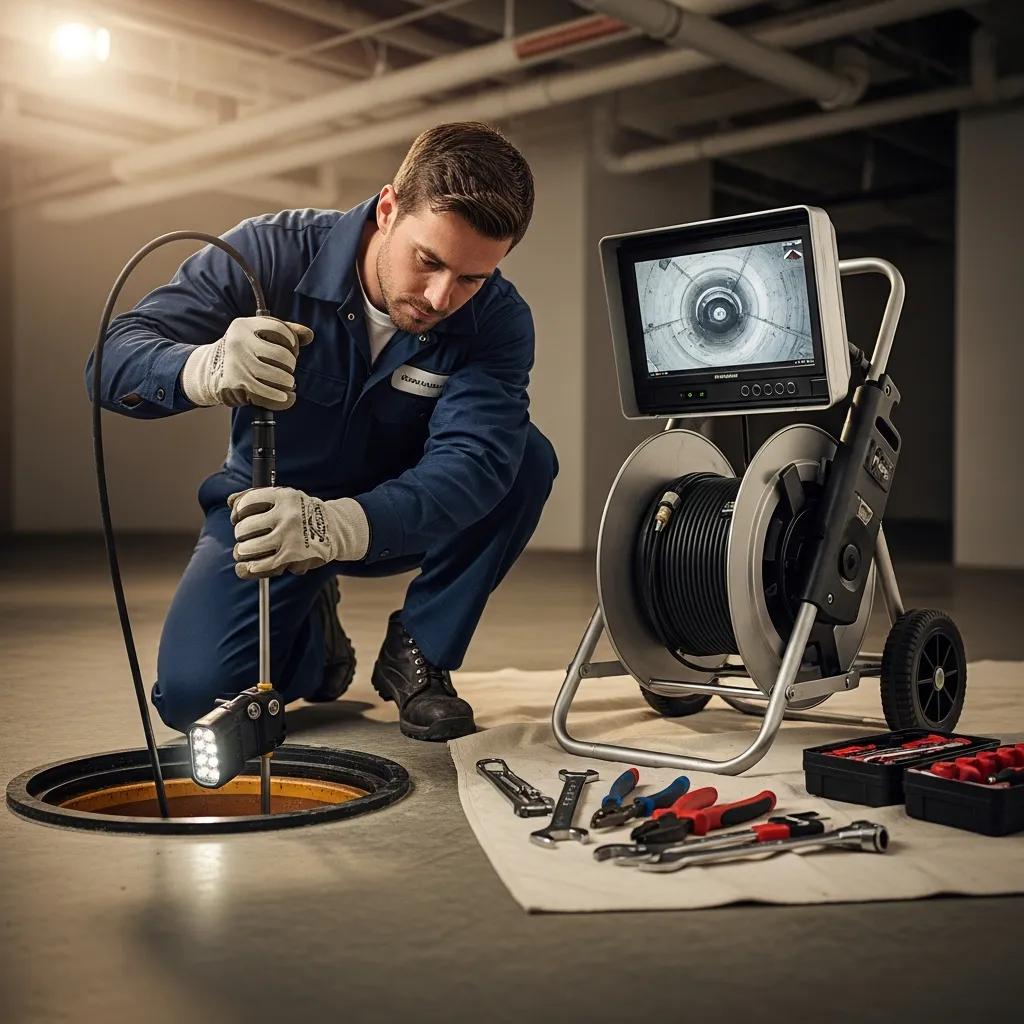
If you’ve just gotten a camera inspection back showing a damaged sewer line, the first question is never “which method” — it’s “how much.” Fair question, and one that’s hard to answer with a single number, because sewer line repair cost swings more than almost any other plumbing job: national figures range from a few hundred dollars for a spot repair to $20,000+ for a full trenchless replacement under a driveway.
This guide breaks down what actually drives that range — trenchless versus traditional methods, pipe material, length and depth, and the Atlanta-specific factors (older clay and cast-iron lines, tree roots, red clay soil) that push a quote up or down. For the full picture of how a repair actually gets diagnosed and completed, see our companion piece, Sewer Line Replacement in Atlanta: What the Process Actually Looks Like. For the service itself, visit our sewer line repair and replacement page.
National Cost Ranges for Sewer Line Repair
According to HomeGuide’s 2026 cost data, sewer line work spans a wide range depending on scope:
| Scope | Typical range |
|---|---|
| Spot repair | $150 – $3,800 |
| Full replacement (40 linear feet) | $2,000 – $10,000 |
| Replacement, per linear foot | $50 – $250 |
| National average (all jobs) | ~$6,000 ($500 – $20,000) |
That’s a wide band because “sewer line repair” covers everything from a single cracked section to a full-length replacement under a finished yard. The method you use narrows it considerably.
Trenchless vs. Traditional: Cost by Method
This is the decision that moves your number the most. Traditional open-cut repair means digging a trench along the full length of the damaged pipe — the most disruptive option, but often the only one for a severely collapsed line. Trenchless methods repair or replace the pipe through one or two small access points instead of a full trench.
| Method | Cost per linear foot | Best for |
|---|---|---|
| Traditional open-cut trenching | $5 – $12 (excavation only, before pipe/labor) | Severely collapsed or misaligned pipe |
| Pipe bursting (trenchless) | $60 – $200 | Full-length replacement, minimal yard disruption |
| CIPP lining (trenchless) | $90 – $250 | Cracks, root intrusion, intact pipe shape |
| Spin-casting (trenchless) | $80 – $250 | Larger-diameter lines needing a full relining |
Trenchless costs more per foot than digging alone, but that comparison is misleading on its own — traditional repair also means restoring whatever sat above the trench afterward (landscaping, driveway, walkway), which trenchless mostly avoids. For a line that runs under a driveway, mature trees, or a finished patio, trenchless is frequently the cheaper option once restoration is priced in, not just the more convenient one.
Is Trenchless Sewer Repair Worth the Cost?
For most Atlanta homeowners, yes — particularly on in-town lots where the sewer line runs under paved driveways, established landscaping, or hardscaping that would be expensive to tear out and rebuild. The math favors trenchless most clearly when restoration costs would otherwise erase the savings from cheaper open-cut digging. It favors traditional excavation most clearly when the pipe has fully collapsed, is severely misaligned, or sits somewhere with no room for trenchless equipment access.
What Else Drives the Cost
Beyond method, four factors move your specific number:
Pipe material. Older cast-iron and clay lines (common across Atlanta’s in-town neighborhoods) run $20–$75 per linear foot to replace versus $3–$11 for modern PVC or ABS — one reason older homes often see higher quotes than new construction.
Length and depth. A short, shallow run costs far less than a long line buried deep enough to need shoring or extra excavation safety measures.
Access. A line reachable from an open side yard is cheaper to repair than one running under a driveway, mature tree roots, or a finished basement slab.
Diagnostics and prep work. A camera inspection ($125–$500 nationally) is standard before any quote — it’s how a contractor confirms the damage, its exact location, and which method actually applies to your pipe. Related prep costs include a sewer cleanout ($500–$2,000, if your line doesn’t already have one) or hydro jetting ($250–$800) to clear roots and debris before a repair. Our sewer camera inspection page covers what that process looks like, and our hydro jetting page covers when that’s the right first step versus a straight repair.
Atlanta-Specific Cost Factors
A few things about Atlanta specifically affect what you’ll pay.
Older Clay and Cast-Iron Lines
Neighborhoods with housing stock from the early-to-mid 1900s — Grant Park, Inman Park, Candler Park, and similar in-town areas — often still have original clay or cast-iron sewer laterals. Clay pipe is especially prone to root intrusion at its joints, and cast iron corrodes internally over decades. Both push a repair toward full trenchless relining or replacement rather than a simple spot patch, since the surrounding pipe is usually near end-of-life too.
Tree Roots and Red Clay Soil
Atlanta’s tree canopy is a real factor: roots seek out the moisture and nutrients in a sewer line and can crack or fully block a pipe over time. Georgia’s red clay soil also shifts more than sandy or loamy soil, which can cause pipe bellies (sagging sections that trap waste) over the years. Both are common findings on an Atlanta camera inspection and are part of why “how much will this cost” so often comes back to “it depends what the camera finds.”
Permits
The City of Atlanta’s Office of Buildings requires a permit to install, repair, or replace plumbing equipment — sewer line work falls under that requirement in most cases. Permit fees nationally run in the $30–$500 range depending on project scope, though the exact fee for your specific job is confirmed through the city’s permitting process rather than a flat published rate. When Fix & Flow handles a sewer line repair, pulling the permit is part of the job.
How to Get an Accurate Number (Not a Guess)
The only way to get a real quote is a camera inspection — everything above is a national benchmark, not a price for your house. Once a technician sees exactly where the damage is, what the pipe is made of, and how deep and accessible it is, you get a specific number for a specific method, not a range. Fix & Flow has handled sewer line repairs across the Atlanta area for more than 15 years (since 2010), with no subcontractors — the licensed plumber who runs your camera inspection is the one who does the repair.
Book a free estimate or call/text (404) 800-3569, or contact us to get a real number for your line.
Frequently Asked Questions
How much does it cost to fix a sewer line?
Nationally, spot repairs run $150–$3,800 and full replacements run $2,000–$10,000 for a typical 40-foot run, or $50–$250 per linear foot. Trenchless methods (pipe bursting, CIPP lining) run $60–$250 per linear foot on their own, but often cost less than traditional excavation once you factor in restoring a driveway, yard, or landscaping afterward. The only way to get an exact number is a camera inspection of your specific line.
Is trenchless sewer repair worth it?
For most Atlanta homeowners with a line running under a driveway, mature landscaping, or hardscaping, yes — the higher per-foot cost is usually offset by not having to rebuild what sits above the pipe. Traditional open-cut repair tends to make more sense when the pipe has fully collapsed or there’s no clear access point for trenchless equipment.
Is sewer line repair covered by insurance?
It depends on your policy and the cause of damage. Homeowners insurance sometimes covers sudden, accidental damage (like a line crushed by a falling tree) but typically excludes gradual wear, root intrusion, or age-related deterioration — the most common causes of sewer line failure. Some insurers offer optional service line coverage as a rider specifically for this gap. Check your policy or ask your insurer directly before assuming either way.
Who is responsible for sewer line repair — the homeowner or the city?
In Atlanta, as in most cities, the homeowner is responsible for the lateral line running from the house to the point where it connects to the municipal sewer main, typically at or near the property line. The city is generally responsible for the main line itself. If you’re unsure which section is failing, a camera inspection will show exactly where the damage sits relative to that connection point.
How long does trenchless sewer repair last?
CIPP lining and pipe bursting are both designed for a long service life — commonly cited in the 50-year range for a properly installed liner or new pipe, comparable to or longer than traditional replacement pipe. Actual lifespan depends on installation quality, pipe material, and ongoing root or grease intrusion, which is why periodic camera inspections are worth doing even after a repair.