 Skip to content

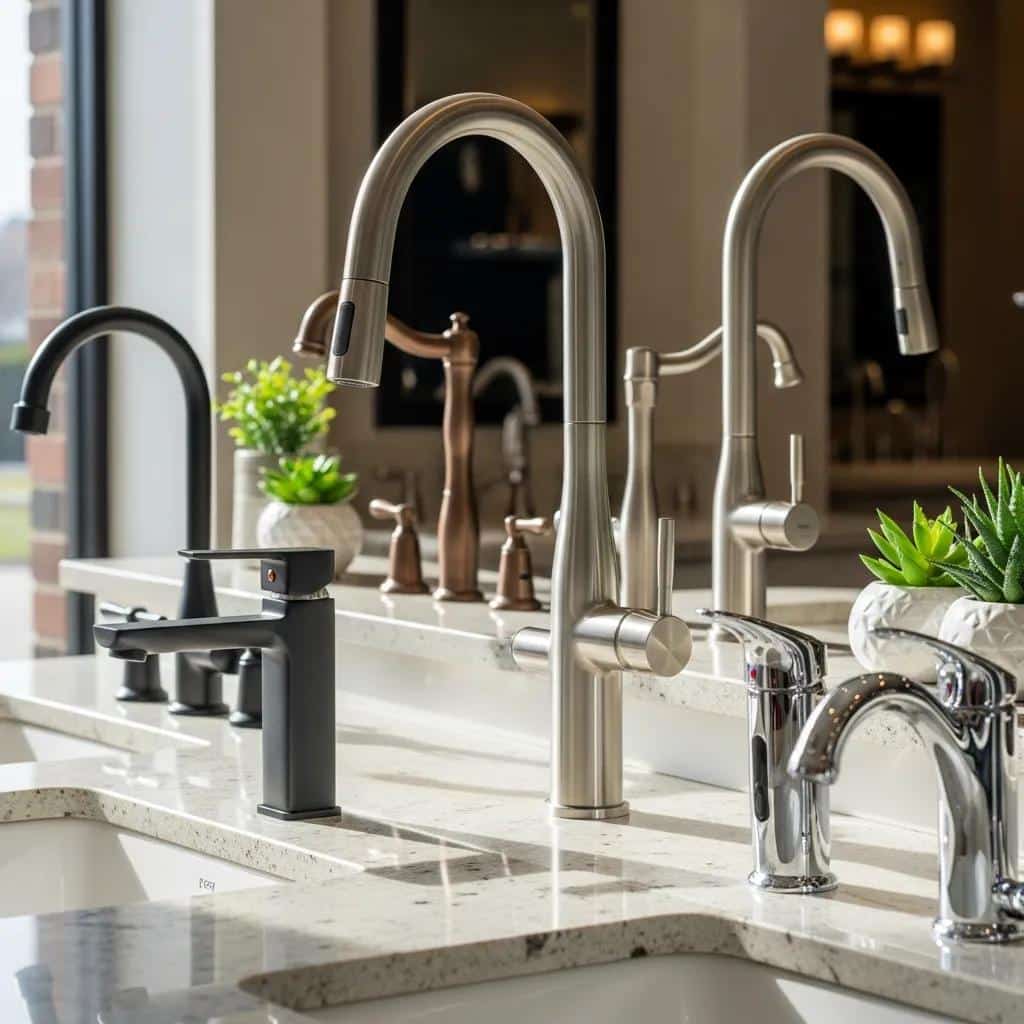
How to Choose the Right Faucet for Your Sink: Complete Kitchen and Bathroom Faucet Buying Guide
Choosing the right faucet for your sink affects daily use, long-term maintenance, and the final look of your kitchen or bathroom, so getting the match right saves time and prevents leaks. This guide explains faucet types, sink compatibility, finishes, brand considerations, installation steps, and basic troubleshooting so you can pick a faucet that fits functionally and stylistically. You will learn how to measure sink hole configurations, weigh spout height and reach against splash control, compare finishes for durability in local water conditions, and evaluate Kohler, Moen, and Delta models for Atlanta-area serviceability.
For DIY-minded homeowners we outline tools and step-by-step replacement tips, and we clarify when complexity, local code, or hidden damage means hiring a pro is the safer option. Throughout the article we use practical checklists, comparison tables, and maintenance schedules to help you move from selection to installation with confidence while noting local service options available in Greater Atlanta.
What Are the Different Types of Faucets and Which One Fits Your Sink?
A faucet is the plumbing fixture that controls water flow from supply lines into a sink; different faucet types change user experience through handle configuration, spout design, and spray functionality. Understanding the mechanism—single-handle mixing, dual-handle separation, or sensor activation—helps you choose a fixture that balances aesthetics with ergonomics and maintenance needs. The right type depends on sink location (kitchen vs. bathroom), hole count, and tasks such as filling pots or washing delicate glassware. Below is a concise list of common faucet types with one-line best-use notes to guide quick selection and inform further comparison.
Common faucet types and best-use summaries:
- Single-handle faucet: Controls temperature and flow with one lever, ideal for compact bathrooms and ADA-friendly setups.
- Widespread faucet: Separate hot/cold handles and central spout, suited to larger vanities and classic styling.
- Pull-down faucet: High-arc spout with retractable sprayer, best for busy kitchens and deep sinks.
- Pull-out faucet: Lower-profile sprayer suited to smaller kitchens and close-range rinsing.
- Touchless faucet: Sensor-activated operation for hygiene-conscious kitchens and bathrooms.
- Wall-mount faucet: Mounts above sink for vessel sinks or minimalist counters with exposed plumbing.
- Vessel faucet: Tall spout designed for above-counter vessel basins.
- Bridge faucet: Retro, exposed-bridge design for period styling and heavy-duty workflows.
These types reflect hyponyms of the broader category plumbing fixtures and show how handle, spout, and spray components (meronyms) change user interaction. Understanding these mechanics leads naturally to matching faucet choice with sink hole configuration and spout clearance requirements.
Intro to comparison table: the table below maps type to hole count and quick pros/cons to make matching easier.
| Faucet Type | Typical Hole Count | Best Use / Pros | Cons |
|---|---|---|---|
| Single-handle faucet | 1 | Compact design, easy temperature control | Less precise temp control for some users |
| Widespread faucet | 3 | Elegant look, separate handles | Requires larger deck or three holes |
| Pull-down faucet | 1-3 | Flexible sprayer, great for pots | Higher spout may need clearance |
| Pull-out faucet | 1 | Space-saving sprayer, maneuverable | Shorter reach than pull-down |
| Touchless faucet | 1-3 | Hands-free hygiene, conserves water | Requires batteries or power |
| Wall-mount faucet | 1-2 | Good for vessel sinks, clear counter space | Requires wall plumbing and reinforcement |
This table helps you quickly identify which hyponym fits your sink layout and usage pattern. Next, we’ll explore single-handle features and when to choose pull-down or touchless models.
What Are the Features and Benefits of Single-Handle Faucets?

A single-handle faucet combines flow and temperature control into one lever, simplifying operation and reducing counter clutter by usually requiring a single hole. Mechanically, many use a cartridge valve or ceramic disc to mix hot and cold supplies, which reduces leak points compared with older compression valves and makes maintenance easier. These faucets are particularly well-suited to small bathrooms, powder rooms, and accessible installations where the ease of one-handed adjustment matters. When choosing one, check spout reach and aerator style to ensure splash control and flow rate match sink depth.
Single-handle faucets are frequently ADA-compliant in lever form and translate well to modern bathroom styling while minimizing supply line complexity. Understanding cartridge types and aerator size can speed future repairs and influence whether you can feasibly do a DIY cartridge swap. These maintenance advantages lead into why some kitchens favor pull-down or touchless faucets for their extended function.
How Do Pull-Down and Touchless Faucets Improve Kitchen Functionality?
Pull-down faucets offer a retractable sprayer head that extends from the spout and typically includes multiple spray modes, making rinsing dishes and filling large pots easier in double-basin setups. Magnetic docking systems and flexible hoses are common features that improve usability and reduce hose sagging, while spray modes help manage water pressure for delicate tasks. Touchless faucets add sensor activation, reducing cross-contamination during food prep and saving water through automatic shutoff, but require battery compartments or hardwired power; sensor calibration and occasional battery replacement are maintenance considerations.
These faucet hyponyms—pull-down and touchless—are practical upgrades for high-use kitchens but require checking spout height and sensor placement for compatibility with cabinets and overhead shelves. Choosing between them depends on whether manual spray flexibility or hands-free operation best serves your daily kitchen workflow, which brings us to matching faucets to sink hole configuration and style.
For homeowners looking to ensure their faucets meet water-efficiency standards, the U.S. Environmental Protection Agency’s WaterSense program lists certified low-flow and sensor faucets that conserve water while maintaining strong performance.
How to Match Faucets to Your Sink’s Hole Configuration and Style?
Matching a faucet to your sink starts with counting and measuring sink holes and understanding which faucet types those holes support, then considering style cohesion with countertops and fixtures. If the sink surface is cracked, loose, or damaged, professional sink repair may be necessary before installation.
The mechanism is straightforward: single-hole sinks support most single-handle and touchless units, while three-hole sinks accommodate centerset or widespread faucets and escutcheons. Aesthetically, finish and spout profile should echo cabinet hardware and lighting to create cohesive visual balance, while practical concerns like deck thickness and basin depth determine whether the spout reach and height will function without splashing.
Measure hole spacing and deck thickness as the first step; this determines whether you need an escutcheon (deck plate) or a widespread spread. If hole counts don’t match your preferred faucet, retrofit options like deck plates or adapter kits can bridge the gap, but some retrofits require deck modification or reinforcement. When retrofit involves drilling or structural changes, hire a professional to avoid damaging countertops or voiding warranties, which leads naturally into practical retrofit options and clearance considerations below.
How to measure holes and choose compatible faucets (snippet-style quick steps):
- Count existing sink holes and measure center-to-center spacing in millimeters or inches.
- Measure deck thickness and underside clearance for supply line and tool access.
- Check spout reach and height against the sink bowl edge to minimize splash.
How Many Holes Does Your Sink Need for Different Faucet Styles?
Hole count maps to faucet configuration: single-hole faucets need one opening, centerset models usually require three holes within a compact footprint, and widespread faucets use three separately spaced holes for handles and spout. Deck plates (escutcheons) can cover extra holes when using a single-hole faucet in a three-hole sink, providing a seamless visual fix without altering the countertop. However, if your sink lacks necessary clearance under the deck or the countertop material cannot be safely drilled (natural stone, solid-surface without proper tooling), professional modification is the right choice.
Adapters and escutcheons are common retrofit solutions, but they may not address supply line routing or valve clearance issues beneath the sink. When modifications include drilling or reinforcing granite, or altering mounting hardware, a licensed plumber can ensure watertight seals and code compliance. Recognizing these constraints prevents costly mistakes and guides the decision to DIY or hire professional help.
What Are the Considerations for Spout Height and Reach?
Spout height and reach determine whether the faucet will clear large cookware, stay out of shelving shadows, and control splash radius in shallow sinks; height measures from deck to highest point, reach measures horizontal distance to spout tip. For double-basin sinks, longer reach helps move between bowls but increases the chance of splashing in shallower basins, so balance reach with bowl depth. Vessel sinks require tall faucets or wall mounts for adequate clearance, while undermount and apron-front sinks typically need shorter spouts to keep spray contained.
Measure intended pot sizes and cabinet clearance before buying, and consider the aerator flow rate as it affects perceived spout performance. Testing with temporary templates or cardboard cutouts helps visualize clearance and leads into finish selection, where local water quality influences maintenance and longevity.
Which Faucet Finishes Are Most Durable and Stylish for Your Home?

Faucet finish affects durability, fingerprint resistance, and long-term maintenance, so finish choice should weigh aesthetics alongside local water quality and cleaning habits. Durable finishes like chrome and brushed nickel are widely used because they stand up to frequent cleaning and resist corrosion; matte black and oil-rubbed bronze offer modern or rustic looks but may show soap residue or require different cleaning methods. Finish selection is a design decision that also impacts cost and the frequency of refinishing or replacement in areas with hard water.
Before the comparison table below, consider that hard water in many locales accelerates mineral buildup that dulls finishes and clogs aerators; protective maintenance and gentle cleaners prolong appearance. The table compares common finishes on durability, maintenance, and relative cost to help you choose a finish suited to style and local conditions.
| Finish | Durability | Maintenance | Typical Cost |
|---|---|---|---|
| Chrome | High | Easy to wipe clean; shows water spots | Low-Mid |
| Brushed Nickel | High | Hides fingerprints; periodic polishing | Mid |
| Matte Black | Medium | Can show soap residue; use mild cleaners | Mid-High |
| Oil-Rubbed Bronze | Medium | Patina develops; avoid abrasive cleaners | Mid-High |
This table clarifies trade-offs and helps you choose a finish that balances style and upkeep; next we compare specific pros and cons of popular finishes in practice.
What Are the Pros and Cons of Chrome, Brushed Nickel, and Matte Black Finishes?
Chrome is durable, reflective, and easy to maintain, but it tends to show water spots and fingerprints quickly, requiring frequent wiping. Brushed nickel hides fingerprints and light scratches well and offers long-lasting color stability, though it generally costs more upfront than chrome. Matte black provides a contemporary statement and pairs well with light countertops, but it can show soap scum and may require specialized cleaners to avoid streaking.
Consider how often you will clean and whether you prefer a finish that masks wear; finish choice interacts with the sink material and countertop, and maintenance practices influence how long the finish remains attractive. These practical finish trade-offs lead into how finishes affect long-term maintenance under local water conditions.
How Do Faucet Finishes Affect Maintenance and Longevity?
Finish materials influence cleaning routines: chrome tolerates alkaline cleaners, brushed nickel resists mild abrasives, while matte and specialty finishes require pH-neutral cleansers to preserve coatings. Hard water increases mineral deposits that abrade finishes and clog aerators, so installing a water filtration or softening prefilter may extend finish life and improve aerator performance. Annual inspection of seals and cartridges prevents seepage that can undermine finish integrity at joints and mounting points.
A simple maintenance plan reduces premature replacement and preserves aesthetic value—regular aerator cleaning, gentle wiping, and prompt leak repair minimize corrosion and discoloration. These maintenance practices naturally flow into brand choices where warranty and parts availability affect long-term serviceability in Atlanta.
What Are the Best Faucet Brands for Atlanta Homes in 2025?
Selecting among brands should weigh warranty coverage, parts availability, and local serviceability because rapid access to replacement cartridges or sensor modules shortens repair time. Brands like Kohler, Moen, and Delta are commonly recommended because they combine proven valve technologies, accessible repair parts, and widespread retail and distributor stocking that supports faster installation and repair in many markets. Local supply channels and service networks influence whether a brand’s specialized parts can be sourced quickly or require longer lead times.
| Brand | Strengths | Parts Availability / Local Service | Typical Price Range |
|---|---|---|---|
| Kohler | Strong design and finish options; solid warranties | Commonly stocked by local suppliers and service pros | Mid-High |
| Moen | Reliable cartridges and touchless tech; good warranty | Widely available parts; many technicians familiar with repairs | Mid |
| Delta | Innovative spray and magnetic docking; cartridge designs are serviceable | Local distributors often stock parts; quick replacements | Mid |
This table helps prioritize brands based on how quickly parts and service can be obtained locally, which reduces downtime and can influence total cost of ownership. That assessment informs the brand-specific rationale below.
Why Choose Kohler, Moen, or Delta Faucets for Your Sink?
Kohler is favored for design variety and finish durability, Moen for cartridge reliability and straightforward repairs, and Delta for innovations like magnetic docking and robust spray options. Each brand offers product lines including single-handle, widespread, pull-down, and touchless models, and their common valve and cartridge designs mean many plumbers can source replacement parts quickly. In the Atlanta area, local stocking patterns and technician familiarity often shorten repair lead times for these brands, which makes them practical choices for homeowners who want reliable service.
Fix & Flow Plumbing Co. recommends Kohler, Moen, and Delta based on their serviceability and parts availability, and can source and install these brands while advising which line suits your workflow and budget. Knowing which brand aligns with local inventory levels reduces scheduling delays during installation and repair.
How Does Local Availability Impact Faucet Installation and Service?
Local parts inventory affects installation timelines: stocked cartridges or spray heads mean same-week repairs, while specialty finishes or discontinued lines may need ordering and delay service. Local service pros with experience on a brand minimize diagnostic time and reduce the chance of ordering incorrect parts, and brands with common cartridge designs often translate to simpler DIY repairs. Conversely, rare finishes or smart-sensor modules may have longer lead times and require specialist handling.
When fast turnaround matters—for example in a rental property or busy household—choose brands with strong local distributor networks. If you prefer a specific high-end finish that’s less commonly stocked, plan for potential wait times and discuss sourcing with your installer.
How to Install or Replace a Faucet: DIY Tips and When to Hire a Professional?
Faucet installation is a mix of measurable steps and potential pitfalls: measure hole spacing and clearance, shut off supply valves, remove the old fixture, install the new faucet with correct seals and supply connections, then test for leaks. Essential skills include working in confined spaces under cabinets, identifying valve cartridge types, and ensuring secure mounting to avoid movement that can break supply lines or finishes.
Homeowners comfortable with hand tools and basic plumbing can often replace a straightforward deck-mounted faucet. However, for more complex situations—such as wall-mounted fixtures, drilling into stone countertops, or dealing with gas lines and code-sensitive changes—it’s best to hire a licensed professional. In urgent situations, especially when plumbing issues overlap with gas systems, contacting an emergency gas plumber in Atlanta can ensure the job is handled safely and in compliance with local regulations.
Tools and parts knowledge matter: the right basin wrench and flexible supply lines save time, while Teflon tape and proper sealing prevent leaks. When you encounter corroded supply shut-off valves, stripped fasteners, or unclear plumbing layouts, hiring a pro reduces risk of water damage and ensures code compliance. The decision framework below helps determine when to DIY and when to call a professional.
- Turn off water at nearby shut-off valves and open the faucet to drain the water lines and begin work.
- Disconnect supply lines and remove mounting nuts with a basin wrench.
- Clean the deck and install the new faucet with correct gaskets and mounting hardware.
- Reconnect supplies, open valves slowly, and check for leaks at connections.
What Tools Are Needed for Faucet Installation or Replacement?
Essential tools include a basin wrench for tight mounting nuts, an adjustable wrench for supply lines, plumber’s putty or silicone for sealing, and Teflon tape for threaded connections; having a flashlight and bucket helps manage water and visibility in tight spaces. Helpful extras are strap wrenches for stubborn finishes, flexible supply lines to simplify connections, and a cordless driver for faster removal of trim. Safety considerations include ensuring the water supply is fully off and testing for residual pressure before disconnecting lines, and protecting countertop finishes when using tools beneath the sink.
Using the right tools reduces time under the sink and decreases the chance of scratched finishes or damaged supply lines. When specialized tools or confined access prevent safe use, hire a professional who brings appropriate equipment and experience.
When Should You Repair vs. Replace Your Faucet?
Repair is sensible when a single component like a cartridge, aerator, or supply line shows a fault and replacement parts are available at reasonable cost; repairs preserve finishes and minimize upfront expense. Replace when multiple systems fail, finishes are excessively worn, the faucet is older than the expected service life, or you want a functionality upgrade such as switching to touchless or a pull-down sprayer. Consider warranty status, frequency of leaks, and whether replacement will increase water efficiency or solve persistent problems.
A simple decision checklist: repair if the issue is isolated and parts are stocked locally; replace if multiple failures exist, the finish is irreparably damaged, or you want a significant functional upgrade. If parts are unavailable locally or the deck requires modification, professional replacement that includes sourcing and warranty-backed installation is the recommended route.
Fix & Flow Plumbing Co. offers professional installation services and free estimates for cases where retrofit, deck modification, or warranty-backed installation is needed. Their local expertise helps homeowners in Atlanta, Sandy Springs, Decatur, and Dunwoody weigh repair versus replacement and schedule timely service.
What Are Common Faucet Problems and How Can You Maintain Your Faucet?
Common faucet problems include leaks at handles or spouts, drips from worn cartridges or seals, low flow due to clogged aerators, and sensor issues in touchless units; many stem from mineral buildup or worn internal parts. Regular maintenance—cleaning aerators, inspecting supply lines, and replacing seals—prevents many faults and extends service life. Troubleshooting starts with shutting off supply valves, isolating the problem (aerator, cartridge, supply line), and determining whether a simple part swap or professional repair is required.
How to Fix Leaks, Drips, and Other Common Faucet Issues?
For leaks and drips, first shut off the supply valves beneath the sink and remove the aerator to check for debris; many low-flow issues resolve after aerator cleaning. Cartridge replacement is the common DIY fix for single-handle faucets—identify the cartridge type, remove the handle, extract the old cartridge, and install the new one with correct seals. For touchless faucets, check batteries and sensor alignment before replacing electronic modules; persistent electronic faults often require professional servicing.
If supply lines are corroded or shut-off valves leak, replace flexible supply lines and consider professional replacement of corroded shut-offs to prevent sudden failures. When you encounter multiple leak points, corroded fittings, or unclear plumbing layouts, stop and contact a licensed pro to avoid water damage and ensure code compliance.
What Is the Recommended Faucet Maintenance Schedule?
A simple, effective maintenance schedule keeps faucets reliable: monthly wipe-downs and visual checks for drips, quarterly aerator cleaning and supply connection tightening, and annual cartridge inspection with seal replacement as needed. For touchless faucets, replace batteries annually or as indicated and verify sensor calibration at least once a year to maintain reliable activation. In hard-water areas, more frequent aerator and finish care prevents mineral buildup that reduces flow and damages coatings.
Following this schedule reduces emergency repairs and prolongs faucet life while maintaining performance and finish aesthetics. Regular maintenance also identifies early signs of failure that can be addressed with simple repairs or planned replacements.
Fix & Flow Plumbing Co. provides maintenance inspections, repair services, and installation with a focus on reliability, craftsmanship, and transparent estimates. They offer 24-hour emergency response for urgent faucet issues and free estimates for installations and complex replacements, serving homeowners and businesses throughout Greater Atlanta including Sandy Springs, Decatur, and Dunwoody. For installations requiring parts sourcing, Fix & Flow can advise on brand availability and schedule timely service to minimize disruption.
Faucet Functionality and Aesthetic Appeal in Kitchen and Bathroom Design
Faucets are utilised frequently to regulate the flow of water in a variety of settings, including bathrooms, kitchens and showers. These products occupy a significant position not only in terms of their functionality but also in terms of their aesthetic appeal. In addition to their functional role, faucets occupy a significant position in terms of interior design, particularly in hospitality settings such as hotels and cafés.
Design, Manufacturing and Characterisation of the Faucet with 3D Metal Printer, 2024