 Skip to content

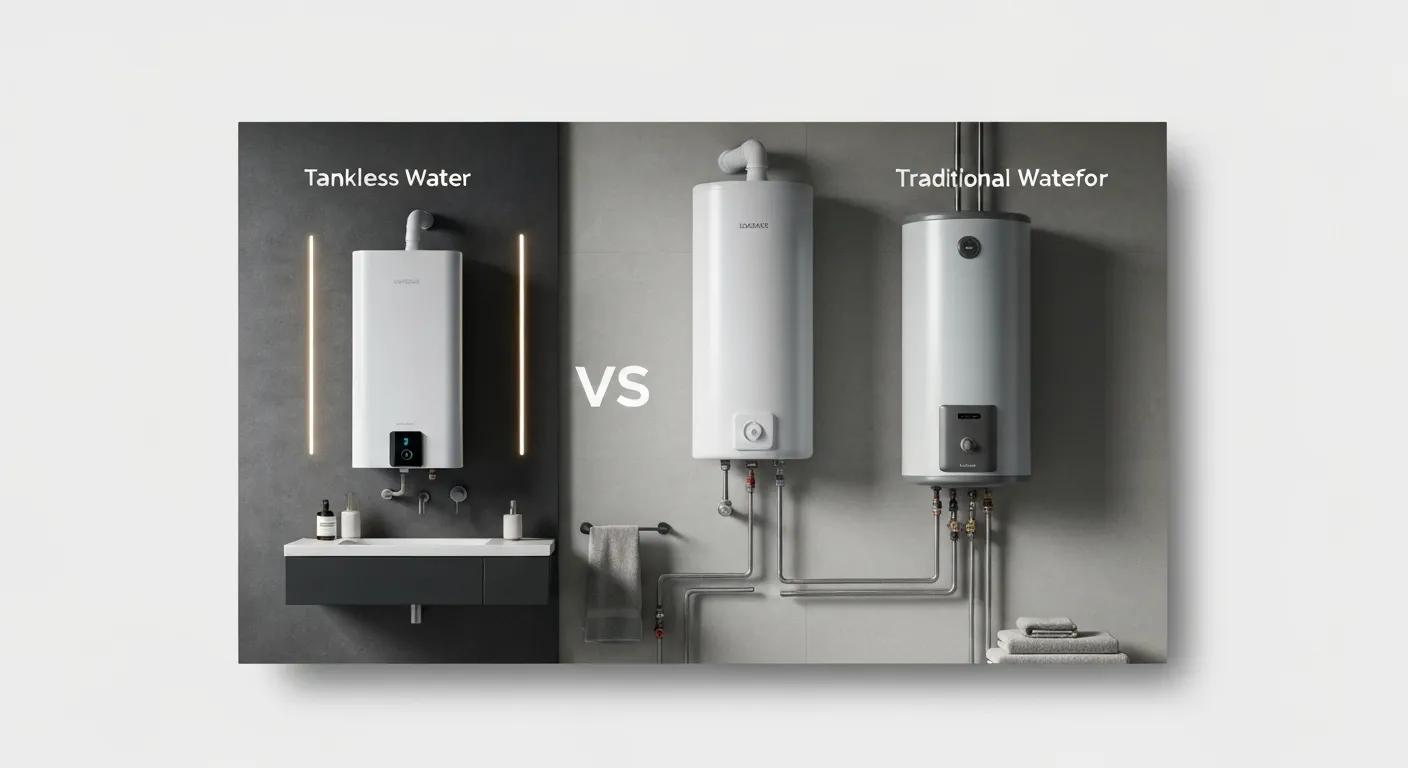
Cost Savings with Tankless Water Heating: A Smart Choice
Key factors to weigh when choosing between and traditional water heaters
Picking the right water heater for your Atlanta home means balancing performance, cost, and efficiency. Below are the main things to check so you can make a confident choice that fits your household and budget.
- Your household’s hot water usage – Figure out how much hot water your family uses daily so you know whether a tankless unit can keep up with your peak demand.
- Your budget – Compare the higher up-front cost of tankless systems with potential long-term energy savings and fewer replacements down the road.
- Space limitations – Tankless units are compact and wall-mounted, freeing up floor or closet space in tight homes.
- Fuel availability – Confirm whether your current gas line or electrical panel can support a new unit without costly upgrades.
- Environmental impact – Tankless systems usually use less energy overall, which lowers your carbon footprint and can help your home run greener.
Tankless vs. Traditional Water Heaters: Which is right for your Atlanta home?

Your water heater choice affects more than showers — it impacts monthly bills and everyday comfort. In Atlanta, homeowners often choose between the familiar storage tank and newer tankless, on-demand units that promise energy savings and a steady hot-water supply. This guide covers installation costs, ongoing expenses, payback timelines, available incentives, maintenance needs, and the trade-offs so you can decide with clarity and confidence.
What this guide gives you:
- A straightforward comparison of tank and tankless systems
- Typical installation price ranges for Atlanta
- Estimated yearly energy costs and savings for gas and electric models
- Lifespan comparisons and common break-even timelines
- Federal and local incentives that reduce up-front costs
- Maintenance expectations and typical repair costs
- Practical tips to choose the right system for your household and budget
Read on and you’ll see where tankless water heating saves money, what to budget for, and how to take the next step with Atlanta professionals.
Tankless vs. Traditional Water Heaters: What’s the real difference?
Both types deliver hot water, but they do it differently. Storage, efficiency, and operating cost are the big differences Atlanta homeowners should consider when trying to cut bills and use energy smarter.
What exactly is a traditional water heater and how does it work?
Traditional water heaters store a large volume of hot water in an insulated tank so it’s ready when you need it. A burner or electric element cycles on to keep that water at the set temperature. The downside is “standby heat loss”: the system uses energy to keep the tank warm even when no one’s running water.
Main features to know:
- Hot water is limited by the tank’s capacity
- Continuous energy use to maintain temperature
- Lower purchase and installation cost up front
That steady energy draw is what on-demand systems aim to eliminate.
How does a tankless water heater work on-demand?
Tankless units heat water only when you open a hot tap. Water flows through a compact heat exchanger and is warmed instantly by a burner or electric elements. Flow sensors trigger the system, so there’s no stored hot water wasting energy between uses.
How that translates into benefits:
- Endless hot water while demand remains within the unit’s flow rate
- Up to 34% better energy efficiency for lower-usage households since there’s no standby loss
- Compact, wall-mounted design frees up floor or closet space
Even in larger homes, tankless systems can still deliver meaningful long-term savings by cutting wasted energy.
Tankless vs. Traditional: The pros and cons at a glance
Here’s a quick comparison to help you see which system matches your needs:
| Water Heater Type | The upside | Something to consider |
|---|---|---|
| Traditional Tank | Lower initial cost for unit and installation | Higher energy bills due to standby heat loss |
| Simpler repairs and broad technician availability | Hot water limited by tank capacity | |
| Tankless (On-Demand) | Saves 24–34% on energy in smaller households | Higher up-front unit cost and possible need for system upgrades |
| Longer service life: 20–25 years versus 10–15 years for tanks | May require gas-line or electrical-panel upgrades |
Next: what installation typically looks like in Atlanta and what you should budget for.
Atlanta installation costs: Tankless vs. traditional water heaters

Your first big expense is water heater installation. In Atlanta, labor rates, permits, and any required upgrades all affect the final price.
What drives installation costs for each type of water heater?
Common cost drivers include:
- Whether your existing gas line or electrical panel can support the new unit
- Permit fees and inspection requirements in Atlanta
- Venting changes needed for high-efficiency systems
- Accessibility of the install location — tight spaces raise labor time
Both tank and tankless installs can be affected by these items, but on-demand systems often need more labor and parts up front.
What are the typical unit prices and installation fees in Atlanta?
Local price ranges you can expect for equipment and installation:
| Water Heater Type | Unit Price Range | Typical Installation Fee |
|---|---|---|
| Traditional (40–50 gal) | $400–$1,200 | $300–$600 |
| Tankless (Gas) | $1,000–$2,500 | $800–$1,500 |
| Tankless (Electric) | $800–$1,800 | $600–$1,200 |
Electric tankless units can cost less to install, but gas tankless models typically deliver larger energy savings over time.
How does Fix and Flow keep pricing clear and provide free estimates?
We give Atlanta homeowners straightforward, itemized quotes that list equipment, labor, permit fees, and any recommended upgrades. Our free estimates and transparent pricing mean no hidden charges — just a clear cost picture so you can decide confidently.
Long-term costs & savings: Tankless vs. traditional water heaters

Initial price matters, but monthly energy bills reveal the long-term picture. Comparing annual operating costs shows how efficiency gains translate into real dollar savings.
How does energy efficiency affect operating costs for each system?
Traditional heaters keep a tank hot and use energy regularly to maintain temperature. Tankless units heat water only when you need it, which can cut fuel or electricity use by up to 34% in smaller households and 8–14% in larger ones.
That reduction in energy use is what creates the savings shown below.
Tankless water heaters: the efficiency edge
Research from the U.S. Department of Energy and ENERGY STAR shows tankless water heaters deliver meaningful efficiency gains over storage tanks. Homes using under about 41 gallons daily can see 24–34% better efficiency. Even higher-demand homes (around 86 gallons daily) can still get 8–14% improvement — mostly because tankless units eliminate standby heat loss and only heat water when you need it.
What are the estimated annual energy costs for gas and electric models in Atlanta?
Using current Atlanta utility rates, average yearly costs look like this:
| Fuel Type | Traditional Annual Cost | Tankless Annual Cost | Estimated Savings |
|---|---|---|---|
| Natural Gas | $550 | $442 | $108 (20%) |
| Electricity | $600 | $556 | $44 (7%) |
Those yearly savings add up and help shorten the payback period for a higher-priced tankless system.
How much can Atlanta homeowners save annually with tankless water heaters?
On average, tankless systems can save homeowners about $44 to $108 per year depending on fuel type and usage. Over a 20-year lifespan, that adds up to roughly $880 to $2,160 in lower energy bills compared to traditional tanks.
Return on investment (ROI) & lifespan: Tankless vs. traditional
Because tankless units typically last longer and use less energy, their ROI can be compelling even with a higher up-front cost.
How long do tankless water heaters typically last compared to traditional models?
Tankless water heaters commonly run 20–25 years with proper maintenance — nearly double the 10–15 year life of conventional tanks. A longer lifespan means fewer replacements and lower long-term expense.
Lifespan and durability: Tankless vs. traditional water heaters
Tankless systems generally have a longer operational life, often lasting 15–20 years and sometimes up to 25 years with careful maintenance. Conventional tank heaters typically run 8–12 years. The extended lifespan of tankless units lowers replacement frequency and contributes to long-term savings.
That longer service life factors directly into your investment math.
How does a longer lifespan boost overall ROI for Atlanta homeowners?
If a tankless unit lasts twice as long, you avoid replacing your heater every decade. That lowers your average annual ownership cost. Combined with energy savings, the longer lifespan speeds up ROI.
What are the typical break-even points for tankless water heater investments?
Based on average savings and equipment costs, expect break-even timelines around:
- Gas tankless models: about 12–15 years
- Electric tankless models: about 14–18 years
If you expect to stay in your home past those windows, a tankless unit is more likely to deliver net savings over time.
Extra cost benefits: Tax credits & rebates for tankless water heaters
Federal and local incentives can meaningfully lower the up-front cost of high-efficiency tankless units, making them more affordable.
What federal tax credits are available for ENERGY STAR certified tankless water heaters?
At the moment, qualifying ENERGY STAR gas tankless water heaters (UEF ≥ 0.95) are eligible for a federal tax credit covering 30% of project costs, up to $600. These credits apply through December 31, 2025, and reduce your federal income tax liability.
Federal tax credits for energy-efficient tankless water heaters
The Inflation Reduction Act of 2022 provides a federal credit of 30% of project costs (capped at $600) for ENERGY STAR certified tankless gas water heaters with a UEF of 0.95 or higher. This incentive applies to qualifying purchases and installations between January 1, 2023, and December 31, 2025.
Are there local Atlanta or Georgia rebates for tankless water heater installation?
Georgia utilities and local programs sometimes offer rebates for high-efficiency water heater upgrades. Past offerings from companies like Georgia Power and Atlanta Gas Light have ranged roughly $100–$200, though programs change over time.
How do tax credits and rebates reduce up-front costs?
Combining the federal tax credit with available local rebates can lower your initial investment by as much as $800, narrowing the gap between tankless and traditional systems and speeding up payback.
Maintenance & repair costs: Tankless vs. traditional water heaters
Ownership costs include regular maintenance and occasional repairs. Knowing what to expect helps you avoid surprises and keep systems running efficiently.
What are the typical maintenance requirements and costs for tankless water heaters?
Tankless units need annual descaling to prevent mineral buildup. DIY descaling costs around $75–$150; hiring a pro runs about $150–$300. Regular descaling preserves the heat exchanger’s efficiency and extends the unit’s life.
Consistent maintenance prevents performance drops and costly repairs later on.
How do traditional water heater maintenance and repair costs compare?
Conventional tanks require periodic care too — replacing an anode rod runs about $50–$100 and flushing sediment costs $75–$150 every 1–2 years. Repairs for leaks or heating elements typically fall in the $150–$400 range, depending on the issue.
How can proper maintenance extend lifespan and reduce repair expenses?
Routine care — flushing sediment, checking valves, and swapping anode rods — benefits both system types. For tankless heaters, regular descaling is essential to help them reach the advertised 20–25 year lifespan and protect your investment.
Choosing the right water heater for your Atlanta home
Choosing the right system is about balancing up-front cost, long-term savings, household hot water demand, and available incentives so you get the best fit for your needs.
What factors should Atlanta homeowners consider when choosing between tankless and traditional water heaters?
Key things to weigh:
- Your household’s hot water usage — Large families may need more flow than a single tankless unit can supply.
- Your budget — Balance higher up-front cost against future energy and replacement savings.
- Space limitations — Tankless units are compact and reclaim floor or closet space.
- Fuel availability — Confirm that your gas line or electrical panel is adequate.
- Environmental impact — Tankless systems typically use less energy and reduce your carbon footprint.
Consider these points to choose a solution that matches how your household uses hot water and what matters most to you.
How does Fix and Flow support Atlanta homeowners with personalized consultations?
Our licensed plumbers provide free in-home assessments. We’ll review your hot water needs, inspect your current setup, and recommend the best-fit options. With transparent estimates and expert installation, Fix and Flow helps you upgrade for comfort and efficiency without surprises.
What are the environmental and space-saving benefits of tankless water heaters?
By eliminating standby heat loss and using less fuel, tankless units cut greenhouse gas emissions and reduce energy bills. Their wall-mounted design also frees up space in basements or utility rooms for storage or other uses.
Frequently Asked Questions
What are the main advantages of tankless water heaters over traditional models?
Tankless water heaters offer several advantages, including energy efficiency, as they heat water on demand, eliminating standby heat loss. This can lead to significant savings on energy bills, especially for smaller households. Additionally, tankless units have a longer lifespan, typically lasting 20-25 years compared to 10-15 years for traditional tanks. Their compact design also saves space, making them ideal for homes with limited storage. Overall, these benefits contribute to a more sustainable and cost-effective hot water solution.
How do I determine the right size tankless water heater for my home?
To choose the right size tankless water heater, assess your household’s peak hot water demand, which is measured in gallons per minute (GPM). Consider the number of fixtures that may be used simultaneously, such as showers, faucets, and appliances. Most tankless models specify their flow rate, so select a unit that can meet your peak demand. Consulting with a professional can help ensure you choose a system that provides sufficient hot water without overpaying for capacity you won’t use.
What maintenance is required for tankless water heaters?
Tankless water heaters require regular maintenance to ensure optimal performance and longevity. This includes annual descaling to prevent mineral buildup, which can affect efficiency. Descaling can be done as a DIY project or by hiring a professional, with costs ranging from $75 to $300. Additionally, routine checks of the system’s components, such as filters and vents, are recommended. Proper maintenance can extend the lifespan of the unit and reduce the likelihood of costly repairs down the line.
Can I install a tankless water heater myself, or should I hire a professional?
While some homeowners may consider DIY installation for a tankless water heater, it is generally recommended to hire a professional. Proper installation involves ensuring that the gas line or electrical panel is adequate, especially if you require gas line installation in Atlanta for a new or upgraded system. It also includes adhering to local building codes and making necessary adjustments for venting. A licensed plumber can provide valuable insights into the best unit for your needs and ensure that the installation is safe and efficient, ultimately saving you time and potential future costs.
What are the environmental benefits of switching to a tankless water heater?
Switching to a tankless water heater can significantly reduce your household’s carbon footprint. These systems are more energy-efficient, as they only heat water when needed, which decreases overall energy consumption. This efficiency translates to lower greenhouse gas emissions compared to traditional water heaters that continuously maintain a tank of hot water. Additionally, the compact design of tankless units can free up space for other environmentally friendly solutions, contributing to a more sustainable home environment.
Are there any specific local incentives for installing tankless water heaters in Atlanta?
Yes, Atlanta homeowners may benefit from local incentives for installing tankless water heaters. Various utility companies, such as Georgia Power and Atlanta Gas Light, have previously offered rebates for high-efficiency water heater upgrades, typically ranging from $100 to $200. These programs can change, so it’s advisable to check with local utilities for current offerings. Combining these rebates with federal tax credits can significantly reduce the initial investment for a tankless system.
Do tankless water heaters really save money in Atlanta?
Yes. On-demand heaters can save Atlanta homeowners roughly $44 to $108 per year by running more efficiently and avoiding standby heat loss. Over time, those savings help offset the higher up-front cost.
What is the average lifespan difference between tankless and traditional water heaters?
Tankless units typically last 20–25 years, nearly double the 10–15 year expectancy of conventional tanks. That means fewer replacements and lower long-term costs.
How much does it cost to install a tankless water heater in Atlanta?
Expect a gas tankless install to run about $1,800–$4,000 including unit and labor. Electric tankless installations usually fall in the $1,400–$3,000 range, depending on any electrical or venting upgrades needed.
Are tankless water heaters more energy efficient than traditional models?
Yes. Tankless systems remove standby heat loss and can be 24–34% more efficient in smaller homes and 8–14% more efficient in larger households, which lowers utility bills.
What is the ROI on a tankless water heater for Atlanta homeowners?
With local energy rates and typical usage, many homeowners break even in about 12–18 years. Over a 20-year span, potential savings can reach $1,000–$2,000.
Are there tax credits for installing tankless water heaters in Georgia?
Yes. A federal tax credit covers 30% of project costs (up to $600) for qualifying ENERGY STAR certified gas tankless models. Also watch for occasional rebates from Georgia utilities.
Choosing the right water heater is an investment in comfort, efficiency, and long-term savings. Consider installation costs, operating savings, lifespan, and available incentives to find the best fit for your Atlanta home. Contact Fix and Flow today for a free consultation and a clear, no-surprises quote to upgrade your hot water system with confidence.
Conclusion
Choosing the right water heater can significantly enhance your home’s comfort and efficiency while providing long-term savings. By weighing factors like installation costs, energy efficiency, and available incentives, you can make an informed decision that suits your household needs. Don’t hesitate to reach out to Fix and Flow for a free consultation and transparent pricing tailored to your situation. Upgrade your hot water system today and enjoy the benefits of a more efficient home.